
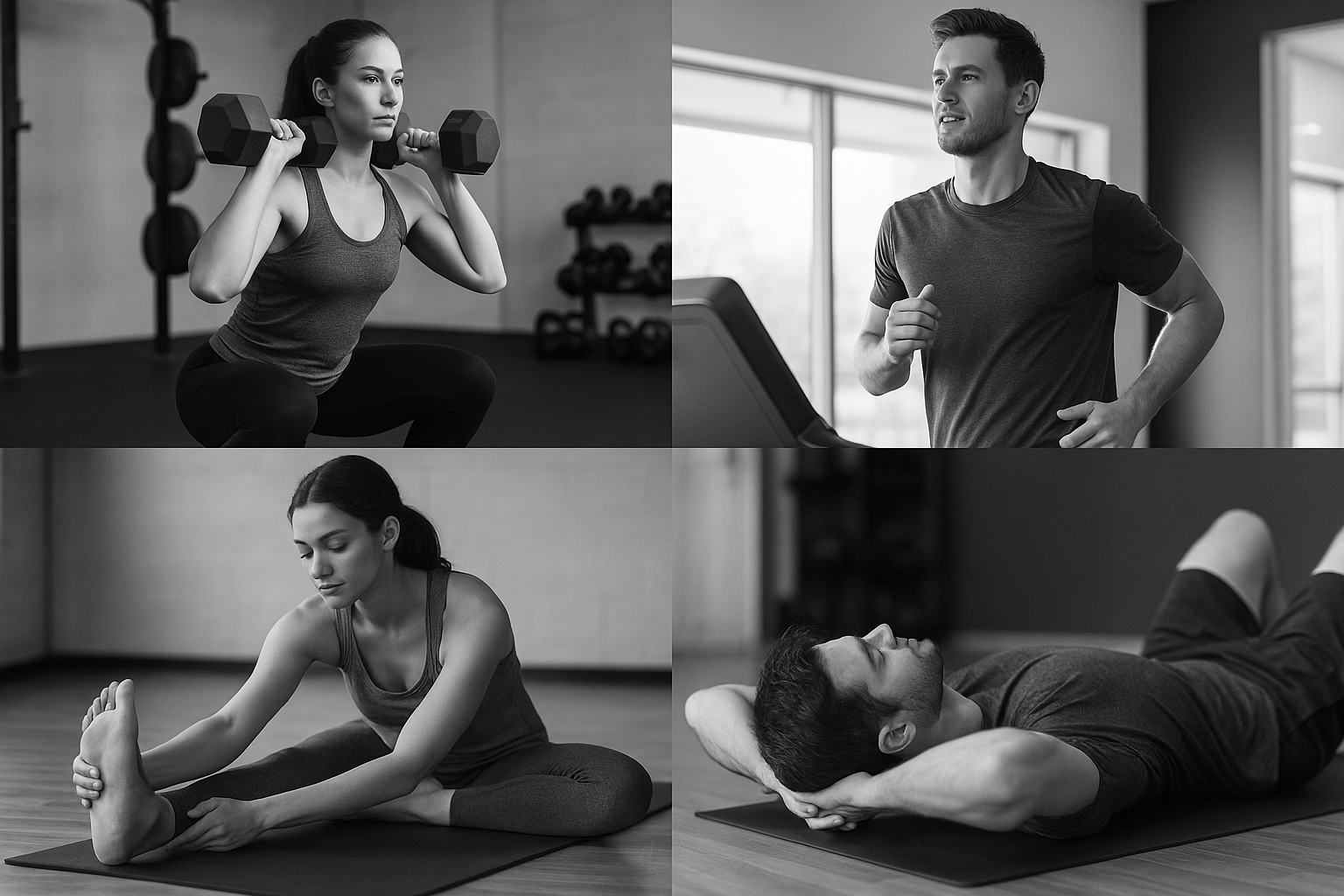
Why a Daily Workout Routine Works
A consistent daily workout routine can make fitness feel automatic—like brushing your teeth. Instead of relying on motivation, you rely on structure. The key is to understand that “daily” doesn’t mean going hard every day. It means moving your body every day with the right blend of strength, cardio, mobility, and recovery so you can progress without burning out.
When planned well, daily movement can improve energy, mood, posture, sleep quality, and overall health markers. The biggest benefit, though, is momentum: small, repeated actions add up quickly.
Before You Start: Set Your Goal and Baseline
Daily routines work best when they match your goals and your current fitness level. Take five minutes to get clear on what you want most over the next 8–12 weeks:
- Fat loss: prioritize consistency, steps, and moderate-intensity cardio alongside strength training.
- Muscle gain: emphasize progressive strength training and adequate recovery.
- Endurance: build cardio volume gradually and keep strength work supportive.
- General health: aim for balance: strength, cardio, mobility, and stress management.
Then establish a baseline (nothing fancy): note how many push-ups you can do with good form, how long you can hold a plank, and how easily you can walk briskly for 20 minutes. This gives you a starting point—and a way to measure progress beyond the scale.
The Best Daily Workout Routine Structure (Weekly Plan)
The simplest way to “work out daily” is to vary intensity across the week. Below is a practical structure that fits most people and can be done at home or in a gym.
Day 1: Full-Body Strength (Moderate)
Focus on big movement patterns. Choose weights that feel challenging but allow good form.
- Squat or leg press: 3 sets of 6–10 reps
- Push-up or bench press: 3 sets of 6–12 reps
- Row (dumbbell, cable, or band): 3 sets of 8–12 reps
- Hip hinge (Romanian deadlift or kettlebell deadlift): 3 sets of 6–10 reps
- Core (plank or dead bug): 2–3 sets, 30–60 seconds
Day 2: Low-Impact Cardio + Mobility
Keep this comfortable. You should be able to talk in short sentences.
- Cardio: 25–40 minutes (brisk walk, cycling, elliptical)
- Mobility: 10 minutes (hips, thoracic spine, ankles, shoulders)
Day 3: Upper Body Strength + Short Conditioning
Build strength and finish with a quick “engine” boost.
- Overhead press: 3 sets of 6–10 reps
- Pull-down or assisted pull-up: 3 sets of 6–12 reps
- Incline dumbbell press: 3 sets of 8–12 reps
- Face pulls or rear delt fly: 2–3 sets of 12–15 reps
- Conditioning finisher: 6–10 minutes (intervals on bike/rower or a brisk incline walk)
Day 4: Active Recovery (Move, Don’t “Train”)
This day protects your consistency. The goal is to feel better after you’re done.
- Easy movement: 20–45 minutes (walk, light swim, yoga flow)
- Optional: gentle stretching or foam rolling 5–10 minutes
Day 5: Lower Body Strength (Moderate to Hard)
Go a bit heavier here if you’re recovering well.
- Deadlift variation or hip thrust: 3–4 sets of 5–8 reps
- Lunge or split squat: 3 sets of 8–12 reps per leg
- Hamstring curl (machine/band) or glute bridge: 2–3 sets of 10–15 reps
- Calf raises: 2–3 sets of 10–15 reps
- Core: side plank or Pallof press: 2–3 sets
Day 6: Cardio (Moderate) + Core
Choose a cardio style you enjoy so it’s sustainable.
- Cardio: 30–50 minutes steady state or 15–25 minutes intervals
- Core circuit (2–3 rounds): bicycle crunches, bird dogs, plank (30–45 seconds each)
Day 7: Mobility + Steps (Lifestyle Fitness)
Think of this as a “reset” day that still counts.
- Mobility: 15–20 minutes (full-body)
- Steps: aim for a comfortable increase (example: 7,000–10,000 steps)
What to Do Each Day (Warm-Up, Main Workout, Cooldown)
Whether you train at home or in a gym, a repeatable format keeps things simple.
Warm-Up (5–10 Minutes)
- Light cardio: 2–3 minutes (walk, bike, jumping jacks)
- Dynamic moves: leg swings, arm circles, hip openers
- Workout-specific prep: 1–2 lighter sets of your first exercise
Main Workout (20–45 Minutes)
Stick to a small number of exercises and do them well. Quality beats quantity. If you’re short on time, reduce the number of sets—not your form.
Cooldown (3–8 Minutes)
- Slow breathing to downshift (1–2 minutes)
- Gentle stretching: hips, hamstrings, chest, lats
How to Progress Without Overtraining
The most common mistake with a daily workout routine is making every session intense. Instead, use simple progression rules:
- Add reps first (example: 8 reps becomes 10 reps) before adding weight.
- Add weight in small jumps (2–5%) once you hit the top of your rep range with good form.
- Rotate intensity (hard, moderate, easy) so you can train again tomorrow.
- Deload every 4–8 weeks by cutting sets in half or using lighter loads for one week.
If you notice persistent soreness, poor sleep, dropping performance, or dread before workouts, reduce intensity for a few days. Consistency always beats pushing through exhaustion.
Daily Workout Routine for Beginners (Simple Option)
If the full weekly plan feels like too much right now, start here. It’s still “daily,” just gentler:
- 3 days/week: full-body strength (squat, push, pull, hinge, core) for 25–35 minutes
- 2–3 days/week: easy cardio (20–40 minutes)
- Daily: 5–10 minutes mobility + an achievable step goal
This approach builds the habit first, then you can increase training volume gradually.
Nutrition, Sleep, and Recovery Tips That Make Daily Workouts Easier
- Protein: include a protein source at each meal to support recovery (e.g., eggs, yogurt, chicken, tofu, beans).
- Hydration: drink water throughout the day; add electrolytes if you sweat heavily.
- Sleep: aim for 7–9 hours. A daily routine is far more effective when you’re rested.
- Stress management: even 5 minutes of breathing or a short walk can reduce “mental fatigue” that ruins consistency.
Conclusion
A daily workout routine doesn’t require daily max effort—it requires daily intention. Combine strength training, cardio, mobility, and true recovery days, and you’ll build a routine that improves fitness while fitting real life. Start with the plan that matches your current level, track small wins, and keep showing up.