
Introduction
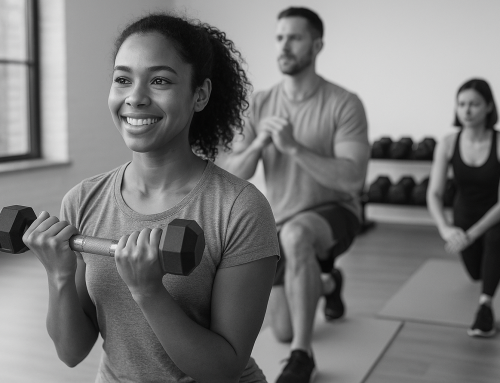
A full body workout routine trains all major muscle groups in a single session. It’s time-efficient, ideal for beginners and busy adults, and highly effective for building strength, muscle, and conditioning when programmed well. This guide explains why full body workouts work, how to structure them, sample routines for different levels, and practical programming tips.
Benefits of a Full Body Workout
- Efficiency: You hit every muscle group in one or two sessions per week, reducing the need for multiple gym visits.
- Frequency: Muscles receive stimulus multiple times per week which supports strength and hypertrophy.
- Fat loss and conditioning: Compound movements burn more calories and improve cardiovascular fitness.
- Flexibility: Easy to adapt to home or gym settings and to mix with sport-specific training.
How to Structure a Full Body Session
Warm-up (5–10 minutes)
Start with dynamic mobility and light cardio to raise heart rate and prepare joints. Include movements like leg swings, arm circles, bodyweight squats, and a short brisk walk or bike ride.
Primary Compound Exercises
Focus the session around 2–4 compound lifts that target large muscle groups and multiple joints. Examples:
- Squat (back, front, goblet)
- Deadlift or hinge variations
- Pressing patterns (barbell or dumbbell bench press, overhead press)
- Pulling patterns (pull-ups, rows)
Perform these early in the workout while you’re fresh. Aim for 3–5 sets of 3–12 reps depending on your goal (strength vs. hypertrophy).
Accessory and Single-Joint Work
Add 2–4 accessory exercises to address weaknesses and balance muscle development—things like lunges, Romanian deadlifts, lateral raises, biceps curls, or triceps extensions. Use higher reps (8–15) for hypertrophy.
Conditioning and Core
Finish with core work (planks, anti-rotation holds) and optional conditioning like intervals, sled pushes, or light circuit work to boost work capacity and fat loss.
Cool-down and Mobility
Spend 5–10 minutes stretching tight areas and using foam rolling or mobility drills to aid recovery.
Sample Full Body Routines
Beginner (3 sessions/week)
- Warm-up
- Squat — 3×8
- Push (Push-up or bench press) — 3×8
- Pull (Bodyweight row or assisted pull-up) — 3×8
- Romanian Deadlift (light) — 3×10
- Plank — 3×30–45 sec
Intermediate (3–4 sessions/week)
- Warm-up
- Barbell squat — 4×5 (or 3×8 for hypertrophy)
- Bench press or overhead press — 4×6–8
- Barbell or dumbbell row — 4×6–8
- Walking lunges — 3×10 each leg
- Hanging leg raise — 3×10–12
Advanced (3–5 sessions/week, variation and intensity)
- Warm-up
- Heavy compound (e.g., deadlift) — 3–5 sets of 2–5 reps
- Secondary compound (squats/presses) — 4×6–8
- Superset accessories (e.g., rows + face pulls) — 3 sets
- Conditioning finisher (tabata or 8–12 min AMRAP)
Programming Tips
- Frequency: Aim for 2–4 full body sessions per week depending on recovery and goals.
- Progression: Track loads, reps, or sets and aim for gradual increases (progressive overload).
- Recovery: Sleep, nutrition, and active recovery days are essential—don’t train heavy every day.
- Auto-regulate: If you’re overly fatigued, reduce volume or intensity rather than forcing every planned set.
- Exercise selection: Prioritize compound lifts, then pick accessory movements that address your weak points.
Common Mistakes to Avoid
- Doing too much volume too soon—start conservatively and build up.
- Neglecting warm-up and mobility, which increases injury risk.
- Poor exercise technique—quality reps beat heavy, sloppy lifts.
- Ignoring recovery—frequency should match your ability to recover.
Conclusion
Full body workout routines are versatile, time-efficient, and highly effective for strength, size, and conditioning when programmed thoughtfully. Prioritize compound movements, progress gradually, and tailor frequency and volume to your experience and recovery. With consistency and smart adjustments, a full body approach will deliver steady results.