
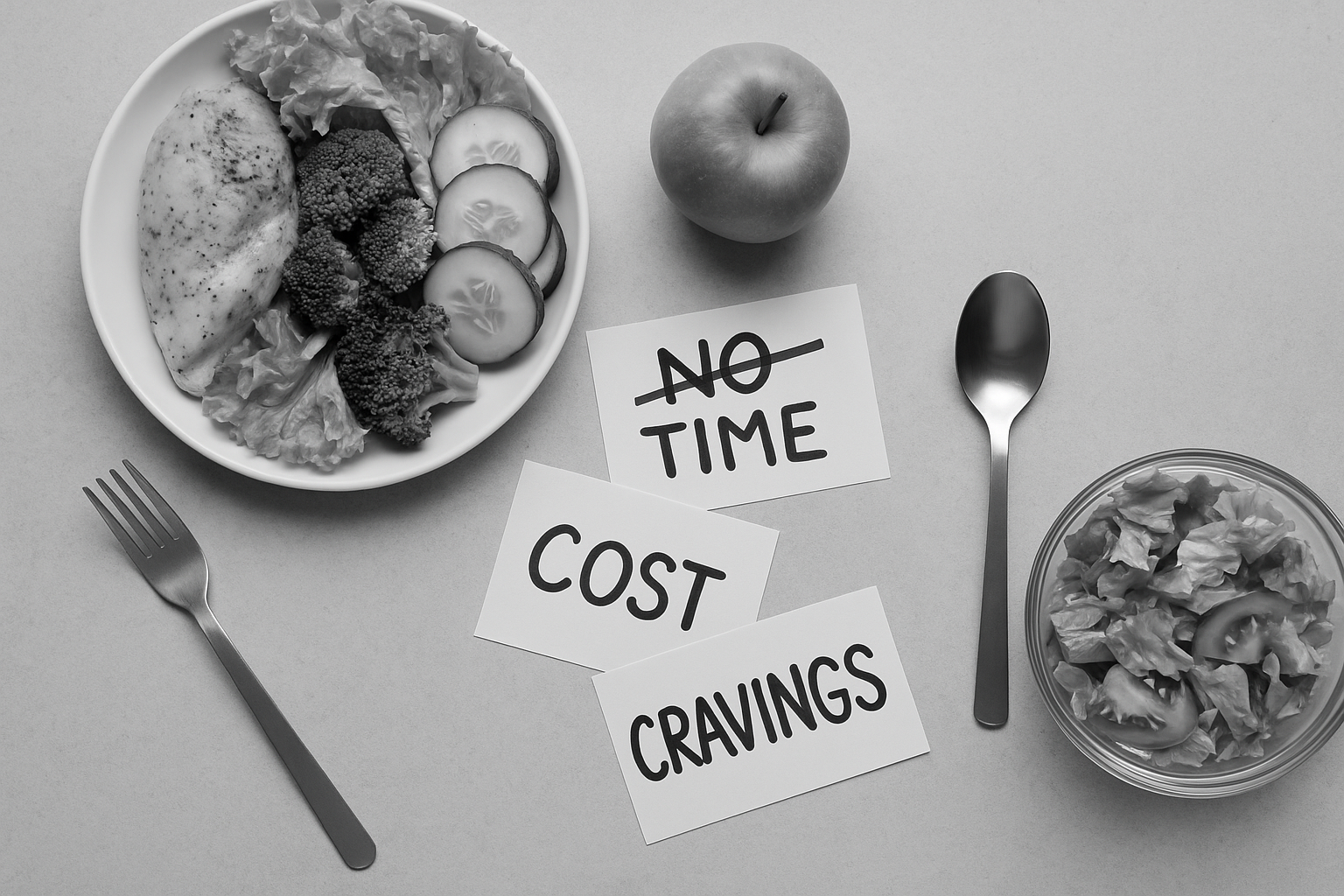
Why healthy eating can feel so hard
Most people don’t struggle with healthy eating because they “lack willpower.” Healthy eating challenges usually come from real-life friction: busy schedules, stress, confusing nutrition messages, limited budgets, family preferences, and environments designed to sell convenience. Add in the emotional role food can play—comfort, celebration, relief—and it becomes clear why good intentions don’t always turn into consistent habits.
The good news: when you identify what’s truly getting in the way, you can build a strategy that fits your life. Below are the most common healthy eating challenges and practical, realistic solutions you can use right away.
Common healthy eating challenges
1. Busy schedules and lack of time
When your calendar is packed, food choices often become reactive. Skipping breakfast can lead to low energy and intense hunger later, and last-minute meals tend to be more processed or restaurant-based.
What helps:
- Keep “assembly meals” on hand: bagged salad + rotisserie chicken, microwave rice + frozen veg + canned beans, Greek yogurt + fruit + nuts.
- Batch-cook one component, not everything: make a pot of quinoa or roasted vegetables and mix-and-match through the week.
- Use a short list of default options: a few breakfasts, lunches, and dinners you can rotate without decision fatigue.
2. Confusing nutrition advice and conflicting diets
One headline says “avoid carbs,” another says “eat more whole grains,” and social media can make nutrition feel like a moving target. This confusion can lead to frustration or “all-or-nothing” thinking.
What helps:
- Focus on fundamentals: mostly minimally processed foods, enough protein, plenty of fiber, and a balance of carbohydrates and healthy fats.
- Use simple plate guidance: aim for half vegetables, a quarter protein, a quarter starch/whole grains, plus a bit of fat (like olive oil or avocado).
- Be skeptical of extreme rules: if a plan eliminates entire food groups without a medical reason, it may be harder to sustain.
3. Cost and budget constraints
Healthy food can feel expensive—especially if you’re buying specialty items or wasting produce that spoils before you use it.
What helps:
- Lean on budget-friendly staples: oats, eggs, beans, lentils, frozen vegetables, canned fish, potatoes, and in-season fruit.
- Choose frozen and canned wisely: frozen produce is nutritious, often cheaper, and reduces waste. Look for low-sodium canned items when possible.
- Plan around sales: build meals based on discounted proteins and seasonal produce rather than planning first and shopping second.
4. Emotional eating and stress
Stress can increase cravings and make quick comfort foods more appealing. Emotional eating is common and doesn’t mean you’re doing anything “wrong”—it means your brain is seeking relief.
What helps:
- Pause before eating: ask, “Am I physically hungry, emotionally hungry, or both?” If it’s both, you can address both.
- Create a “stress menu”: a short list of non-food coping tools (5-minute walk, music, stretching, journaling, calling a friend).
- Keep nourishing comfort foods available: soup with extra veggies, oatmeal with fruit, yogurt with cinnamon—comfort doesn’t have to mean deprivation.
5. Social events, family preferences, and eating out
Birthday dinners, office treats, and family meals can make healthy choices feel awkward—especially if you’re the only one trying to change habits.
What helps:
- Aim for “better, not perfect”: choose one or two priorities (like adding vegetables and drinking water) instead of trying to control everything.
- Use the “add” strategy: add a salad, extra veggies, or a protein side rather than focusing on what to avoid.
- Have a polite default line: “That looks great—maybe later,” or “I’m good for now, thanks,” reduces pressure in the moment.
6. Cravings, convenience foods, and ultra-processed options
Many packaged foods are engineered to be hyper-palatable and easy to overeat. When you’re tired or hungry, convenience wins.
What helps:
- Don’t let yourself get too hungry: regular meals and protein-rich snacks reduce intense cravings.
- Stock “bridge snacks”: nuts, fruit, cheese sticks, hummus, popcorn, or edamame—quick options that still support your goals.
- Make the healthy choice easier: keep washed fruit visible, pre-chop vegetables, and portion snacks into small containers.
7. Lack of cooking skills or confidence
If cooking feels intimidating, it’s hard to rely on home meals consistently. Many people also don’t have the time or energy to learn complicated recipes.
What helps:
- Start with “3-ingredient upgrades”: pasta + jarred sauce + spinach; eggs + frozen vegetables + cheese; rice + canned salmon + cucumber.
- Master a few methods: sheet-pan roasting, stir-frying, and slow-cooker meals cover a huge range of healthy dishes.
- Use shortcuts without guilt: pre-cut veggies, rotisserie chicken, and frozen grains can still create balanced meals.
8. Inconsistent routines and “all-or-nothing” mindset
Many healthy eating challenges come from perfectionism. One “off” meal can feel like failure, leading to giving up entirely.
What helps:
- Adopt the “next meal” rule: no punishment, no overcorrection—just return to your usual plan at the next meal.
- Track consistency, not perfection: aim for a realistic target (like 80% of meals aligned with your goals).
- Set process goals: “eat a protein at breakfast” or “include a vegetable at lunch” is more actionable than “eat clean.”
Strategies that make healthy eating easier
Once you know your biggest barriers, small system changes can dramatically reduce daily effort. Here are a few approaches that work across many lifestyles:
- Plan for your hardest time of day: if evenings are chaotic, prep dinner components in the morning or use a short list of 15-minute meals.
- Build a supportive environment: keep nutritious snacks within reach and put less-helpful options out of sight (or don’t bring them home as often).
- Prioritize protein and fiber: these help with fullness and steady energy—think beans, lentils, eggs, poultry, fish, tofu, yogurt, vegetables, fruit, and whole grains.
- Use “minimum viable” habits: on tough days, focus on a baseline: drink water, eat one vegetable, include one protein source.
- Make it personal: the best way to eat is the one you can sustain while still enjoying your food and your life.
Conclusion
Healthy eating challenges are normal, and they’re rarely about motivation alone. By identifying your main obstacles—time, stress, cost, confusion, or routine—you can replace frustration with practical systems. Start small, stay flexible, and remember: sustainable progress comes from repeatable habits, not perfection.