
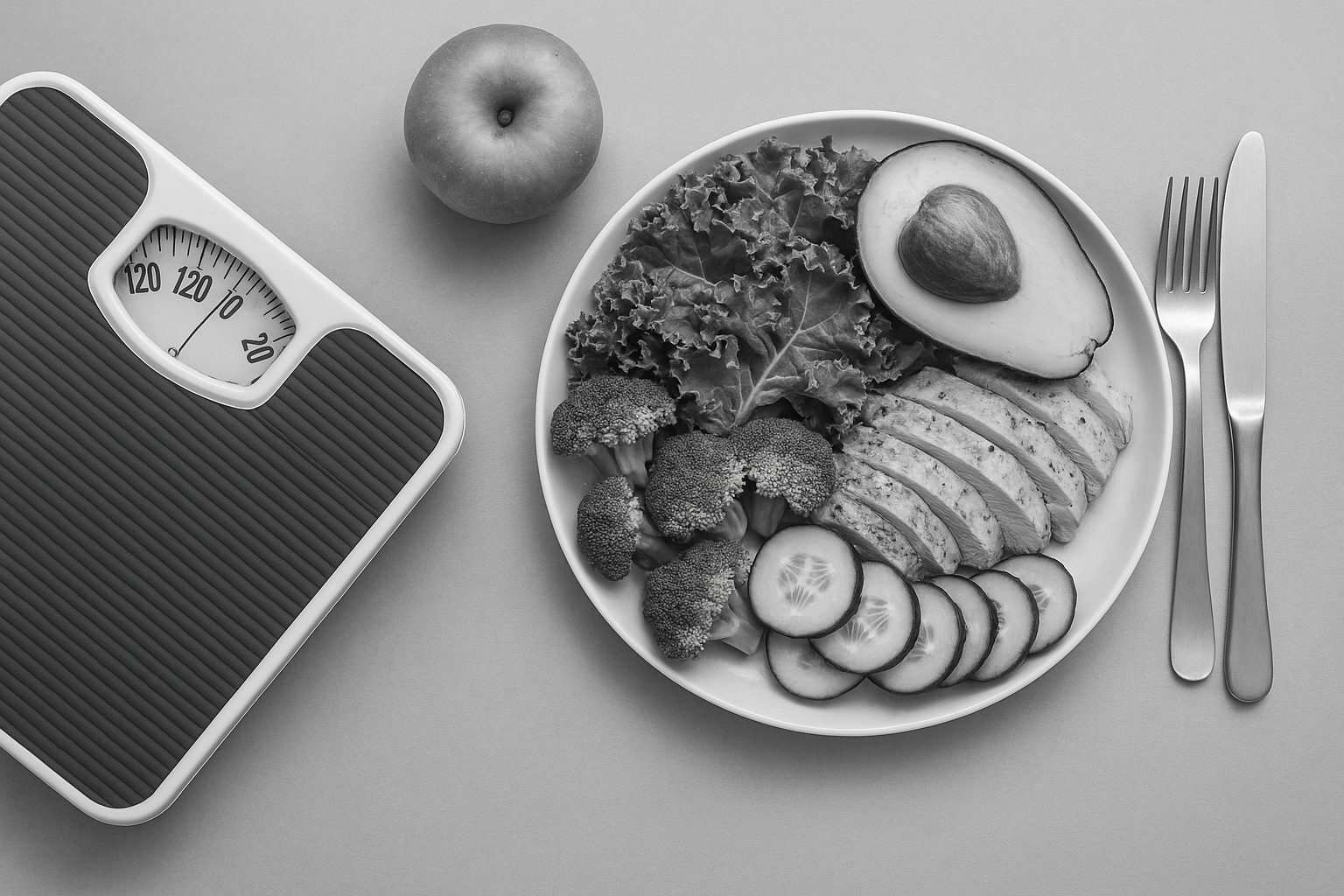
What “Healthy Eating for Weight Loss” Really Means
Healthy eating for weight loss isn’t about eating as little as possible or cutting out entire food groups. It’s about creating a steady calorie deficit (burning more than you eat) without sacrificing nutrition, energy, or satisfaction. The goal is to lose weight while maintaining muscle, supporting your metabolism, and building habits you can keep long-term.
In practice, that usually means prioritizing whole, minimally processed foods, getting enough protein and fiber, managing portions, and planning meals in a way that fits your real life.
Build Your Plate for Fat Loss (Without Feeling Deprived)
A simple way to eat for weight loss is to build most meals around the same key components: protein, high-volume vegetables, smart carbs, and healthy fats. This approach keeps you full and makes your calorie intake easier to manage.
Prioritize Protein at Every Meal
Protein is a cornerstone of healthy eating for weight loss because it helps you feel full, supports muscle maintenance during a calorie deficit, and can reduce cravings. Aim to include a protein source at breakfast, lunch, dinner, and snacks when possible.
- Lean meats: chicken breast, turkey, lean beef
- Fish and seafood: salmon, tuna, shrimp, cod
- Dairy: Greek yogurt, cottage cheese, skyr
- Plant proteins: tofu, tempeh, edamame, lentils, chickpeas
- Eggs: whole eggs or a mix of whole eggs and egg whites
Tip: If you’re often hungry, increase protein slightly before cutting more calories—many people feel better and stick with their plan longer.
Fill Up on Fiber-Rich Foods
Fiber adds bulk to meals, slows digestion, and helps keep blood sugar steadier—three things that can make weight loss feel easier. Most adults benefit from eating more fiber, especially from whole foods.
- Vegetables: leafy greens, broccoli, peppers, zucchini, carrots
- Fruits: berries, apples, oranges, pears
- Whole grains: oats, brown rice, quinoa, whole-wheat pasta
- Legumes: beans, lentils, split peas
- Seeds: chia, flax, hemp
Tip: Increase fiber gradually and drink enough water to avoid digestive discomfort.
Choose Carbs Strategically (Don’t Fear Them)
Carbohydrates aren’t “bad,” but the type and portion matter. For weight loss, focus on carbs that provide fiber and micronutrients, and adjust portions based on your activity level and hunger.
Great options include potatoes, oats, fruit, beans, and whole grains. More processed carbs (pastries, chips, sugary cereals) can still fit occasionally, but they’re easier to overeat and often less filling.
Include Healthy Fats in the Right Amount
Fat supports hormones, helps you absorb fat-soluble vitamins, and makes meals satisfying. Since fat is calorie-dense, portion awareness is key.
- Best sources: olive oil, avocado, nuts, nut butters, seeds
- Fatty fish: salmon, sardines (bonus: omega-3s)
Quick portion guide: start with 1–2 teaspoons oil or a small handful of nuts per meal, then adjust based on progress.
Portion Control That Doesn’t Require Obsessive Tracking
Counting calories works for some people, but it’s not the only method. You can create consistent progress with simple portion strategies.
Use the “Plate Method”
For many meals, try this structure:
- Half the plate: non-starchy vegetables (salad, roasted veggies, stir-fry vegetables)
- Quarter of the plate: protein (fish, chicken, tofu, beans)
- Quarter of the plate: smart carbs (rice, potatoes, quinoa, whole grains)
- Add: a small serving of healthy fat (olive oil dressing, avocado, nuts)
This keeps meals high-volume and satisfying while naturally controlling calories.
Watch Liquid Calories
Beverages can add significant calories without much fullness. If weight loss has stalled, this is a common place to look.
- Swap sugary drinks for water, sparkling water, or unsweetened tea
- Be mindful with specialty coffees, juices, and alcohol
- If you enjoy them, plan portions (e.g., a measured creamer or a single drink)
Plan Treats on Purpose
For most people, an “all-or-nothing” approach backfires. Instead, include treats strategically: a couple squares of chocolate, a small dessert on the weekend, or a favorite snack portioned into a bowl. Planning indulgences reduces guilt and helps you stay consistent.
Meal Planning Tips to Make Healthy Eating Easier
Weight loss is less about perfect nutrition and more about repeatable routines. A little planning goes a long way.
Create a Simple Weekly Framework
Instead of reinventing every meal, pick a few go-to breakfasts, lunches, and dinners you genuinely enjoy. Rotate flavors to prevent boredom (different seasonings, sauces, and cooking styles) while keeping the structure consistent.
Example framework:
- Breakfast: Greek yogurt + berries + chia; or eggs + veggies + toast
- Lunch: big salad with chicken/tofu + beans + olive oil dressing
- Dinner: protein + roasted vegetables + a portion of rice/potatoes
Prep Ingredients, Not Just Meals
You don’t have to batch-cook every recipe. Prepping a few key ingredients can make healthy choices automatic:
- Cook a tray of chicken, tofu, or turkey
- Wash and chop vegetables
- Make a pot of grains or roast potatoes
- Keep quick proteins on hand (tuna packets, eggs, frozen shrimp)
Stock a “Weight-Loss Friendly” Snack List
Snacks aren’t required, but they can help if you go long stretches between meals. Choose options with protein and/or fiber for better staying power:
- Apple + peanut butter
- Greek yogurt + cinnamon
- Cottage cheese + fruit
- Veggies + hummus
- Hard-boiled eggs
Common Mistakes That Stall Weight Loss
If progress feels slow, it’s often due to a few predictable issues—not a lack of willpower.
Eating Too Little Protein
Low-protein meals can lead to more snacking and larger portions later. If you’re frequently hungry, protein is one of the first things to improve.
Overdoing “Healthy” Calorie-Dense Foods
Foods like nuts, cheese, granola, olive oil, and avocado are nutritious—but easy to overeat. You don’t need to avoid them; just measure occasionally to reset your portion awareness.
Inconsistent Weekends
Many people eat well Monday–Friday and unknowingly erase the deficit on the weekend. Try keeping your usual meal structure and planning one or two enjoyable treats rather than letting the day become a free-for-all.
Not Sleeping Enough
Sleep affects hunger hormones, cravings, and decision-making. If you’re doing “everything right” but feel constantly hungry, improving sleep can make healthy eating dramatically easier.
Conclusion
Healthy eating for weight loss works best when it’s built on satisfying meals you can repeat: prioritize protein, load up on fiber-rich foods, choose carbs and fats thoughtfully, and use simple portion strategies you can maintain. Focus on consistency over perfection—small, sustainable changes add up to real results over time.