
Why Healthy Eating Matters
Healthy eating isn’t about perfection or strict rules—it’s about building habits that help you feel energized, support your immune system, improve focus, and reduce long-term health risks. What you eat influences everything from your gut health to your mood, and small changes can add up quickly. The best approach is practical and sustainable: choose nourishing foods most of the time, enjoy treats without guilt, and keep your routine flexible enough to fit real life.
Build a Balanced Plate
A balanced plate makes healthy eating simpler because you don’t have to overthink every meal. When you combine protein, fiber-rich carbs, and healthy fats, you’re more likely to feel satisfied and avoid energy crashes later.
Prioritize protein
Protein supports muscle repair, helps keep you full, and stabilizes your appetite throughout the day. Aim to include a protein source at most meals and snacks, such as eggs, Greek yogurt, beans, lentils, tofu, chicken, fish, or lean meats. If you’re plant-based, pairing legumes with whole grains (like beans and rice) can improve amino acid variety.
Choose fiber-rich carbs
Carbohydrates aren’t the enemy—quality and portion matter. Fiber-rich carbs digest more slowly and support steady energy, gut health, and heart health. Focus on options like oats, quinoa, brown rice, whole-wheat pasta, potatoes with skin, fruits, vegetables, and legumes. If you’re used to refined carbs, try mixing: half white rice and half brown rice, or regular pasta blended with lentil pasta.
Include healthy fats
Healthy fats help with vitamin absorption (A, D, E, and K), hormone production, and long-lasting satiety. Add small portions of fats like olive oil, avocado, nuts, seeds, and fatty fish (salmon, sardines). A drizzle of olive oil on vegetables or a spoonful of nut butter with fruit can make a snack more satisfying without feeling heavy.
Focus on Whole Foods (Most of the Time)
Whole foods tend to be more nutrient-dense and less processed, meaning they often contain more fiber, vitamins, minerals, and beneficial plant compounds. That said, healthy eating doesn’t require an all-or-nothing mindset—many packaged foods can fit into a balanced routine.
Shop the perimeter (but don’t fear the aisles)
Grocery store perimeters often include produce, proteins, and dairy—great building blocks for meals. But useful staples are found in the aisles too: canned beans, tuna, frozen vegetables, oats, brown rice, tomato sauce, and spices. Look for shorter ingredient lists and lower added sugar when possible.
Limit ultra-processed foods without strict rules
Ultra-processed foods can be convenient, but they may be easier to overeat and often contain more added sugar, sodium, and refined oils. Instead of banning them, try a simple strategy: make whole or minimally processed foods the default, and enjoy treats intentionally. For example, pair a favorite snack with fruit or yogurt, or serve dessert after a balanced meal rather than on an empty stomach.
Practice Portion Awareness
Portion awareness helps you meet your needs without feeling deprived. The goal isn’t to measure everything—it’s to notice what keeps you comfortably full and energized.
Use simple visual cues
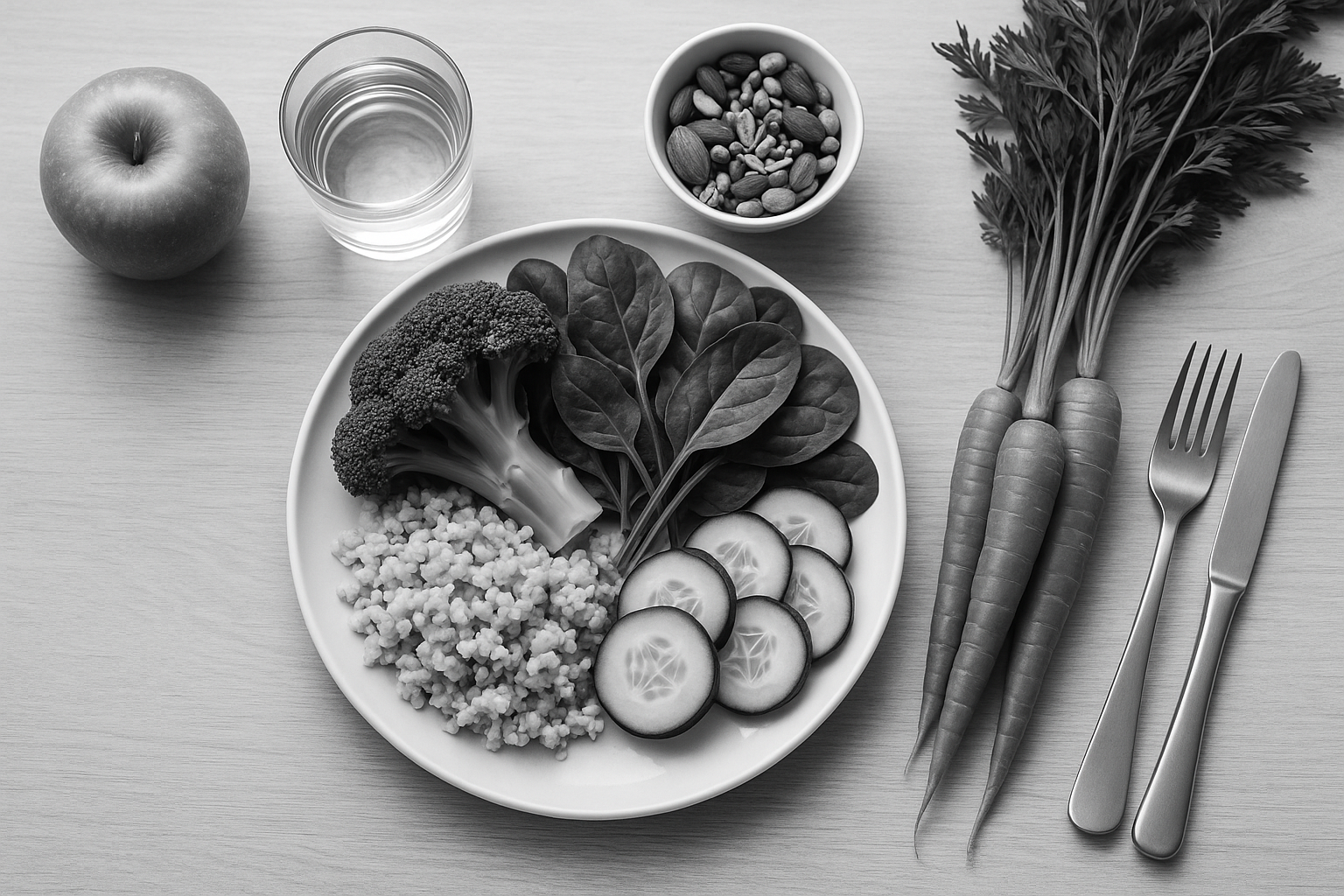
If you don’t want to track macros or calories, use visual guides. A common approach: fill about half your plate with non-starchy vegetables, one quarter with protein, and one quarter with fiber-rich carbs, then add a small portion of healthy fat. This works especially well for lunches and dinners.
Eat mindfully
Mindful eating can reduce overeating and improve satisfaction. Try slowing down, chewing thoroughly, and checking in with hunger and fullness cues mid-meal. If possible, eat without distractions for at least a few bites—notice taste, texture, and how your body feels. You don’t need a perfect mindful meal; even a brief pause can help.
Plan Ahead for Success
Healthy eating becomes much easier when you make the healthy choice the convenient choice. Planning doesn’t have to mean elaborate meal prep—it can be as simple as having a few go-to meals and keeping staples on hand.
Prep ingredients, not just meals
If full meal prep feels overwhelming, prep components instead. Wash and chop veggies, cook a batch of grains, roast a tray of vegetables, or grill/bake a protein for the next few days. Then mix and match: grain bowls, salads, wraps, and stir-fries come together quickly.
Keep healthy snacks available
Balanced snacks can prevent getting overly hungry and reaching for whatever is easiest. Keep options like fruit, nuts, hummus with veggies, cheese, hard-boiled eggs, edamame, or yogurt on hand. A simple formula: pair protein or healthy fat with fiber (e.g., apple + peanut butter, yogurt + berries).
Make Hydration Part of Your Routine
Hydration supports digestion, energy, and overall well-being. Sometimes thirst can be mistaken for hunger, especially mid-afternoon.
Choose water first
Water is the best default. If plain water feels boring, add lemon, cucumber, mint, or a splash of 100% juice. Unsweetened tea and sparkling water can also help you stay hydrated without adding excess sugar.
Watch sugary drinks
Sugary drinks can add a lot of calories quickly without keeping you full. Consider gradually cutting back on soda, sweetened coffee drinks, and energy drinks. If you enjoy them, try smaller sizes, fewer pumps of syrup, or alternating with water.
Healthy Eating on a Budget
Nutritious food can be affordable with a few smart strategies. The key is choosing flexible staples and reducing food waste.
Use frozen and canned options
Frozen fruits and vegetables are picked at peak ripeness and can be just as nutritious as fresh—often cheaper and longer-lasting. Canned beans, lentils, and fish are budget-friendly too. Choose low-sodium options when possible, and rinse canned beans to reduce sodium.
Plan meals around affordable staples
Build meals using low-cost basics like oats, eggs, rice, potatoes, beans, lentils, seasonal produce, and family-size packs of protein. A few examples: veggie omelets, bean chili, lentil soup, tuna salad wraps, or stir-fried frozen vegetables with tofu and rice.
Conclusion
Healthy eating is a collection of small, repeatable habits: build balanced plates, prioritize whole foods, stay hydrated, plan ahead, and keep portions realistic. Start with one or two tips that feel doable this week—like adding a protein to breakfast or prepping vegetables for quick meals—and let consistency do the work over time.