Meal Plan for Muscle Gain: What It Needs to Do
A solid meal plan for muscle gain does three jobs well: it provides enough calories to support growth, delivers high-quality protein to build muscle tissue, and fuels training with carbs and healthy fats so you can progressively lift more. The best plan is also realistic—simple meals, repeatable groceries, and flexible swaps—so you can stick with it for months, not days.
Below you’ll find a clear framework, macro targets, and a sample day you can repeat and adjust. Use it as a template and tailor portions to your body size, appetite, and training schedule.
Step 1: Set Your Calories and Macros
Muscle gain generally requires a small, consistent calorie surplus—enough to support growth without excessive fat gain. Start with a modest surplus and adjust based on scale trends and performance in the gym.
Calories: Start With a Small Surplus
A practical starting point is +250 to +400 calories per day above your maintenance intake. If you gain weight too quickly (more than about 0.25–0.5% of body weight per week), reduce the surplus. If weight and gym performance are flat after 2–3 weeks, increase calories slightly.
Protein: The Non-Negotiable
Protein provides the amino acids needed for muscle repair and growth. Aim for 1.6–2.2 g of protein per kg of body weight per day (about 0.7–1.0 g/lb). Distribute it across meals—most people do well with 25–45 g per meal, 3–5 times daily.
Easy high-protein staples: chicken breast or thighs, lean ground beef or turkey, eggs/egg whites, Greek yogurt, cottage cheese, whey or plant protein, tofu/tempeh, lentils, and fish.
Carbs and Fats: Fuel + Hormonal Support
Carbs are especially valuable for hard training because they replenish glycogen and support performance. Fats support hormones, satiety, and overall health. A balanced starting point:
- Carbs: roughly 40–60% of calories (higher on training days)
- Fats: roughly 20–30% of calories (don’t go too low; many do well with 0.6–1.0 g/kg)
Choose mostly minimally processed carb sources (rice, potatoes, oats, pasta, fruit, whole-grain bread) and healthy fats (olive oil, avocado, nuts, seeds, fatty fish).
Step 2: Build Your Day Around Training
Meal timing isn’t magic, but it can make muscle gain easier. Prioritize nutrition around your workout so you can train harder and recover faster.
Pre-Workout Meal (1–3 Hours Before)
Combine protein + carbs with moderate fat and fiber (too much can feel heavy). Example options:
- Chicken, rice, and a piece of fruit
- Greek yogurt + granola + berries
- Turkey sandwich + banana
Post-Workout Meal (Within 2–3 Hours)
Aim for 25–40 g protein plus a carb source. This supports muscle protein synthesis and replenishes glycogen. Example options:
- Whey shake + bagel or cereal
- Lean beef, potatoes, and veggies
- Tofu stir-fry with rice
Step 3: A Sample Muscle Gain Meal Plan (1 Day)
This sample day is built to be repeatable and easy to scale. Increase or decrease portions to match your calorie target.
Breakfast: High-Protein Oats
- Oats cooked with milk (or fortified soy milk)
- 1 scoop whey (or plant protein) mixed in after cooking
- 1 banana or berries
- 1–2 tbsp peanut butter or a handful of nuts
Why it works: Protein + carbs for training energy and a calorie-dense fat source for an easy surplus.
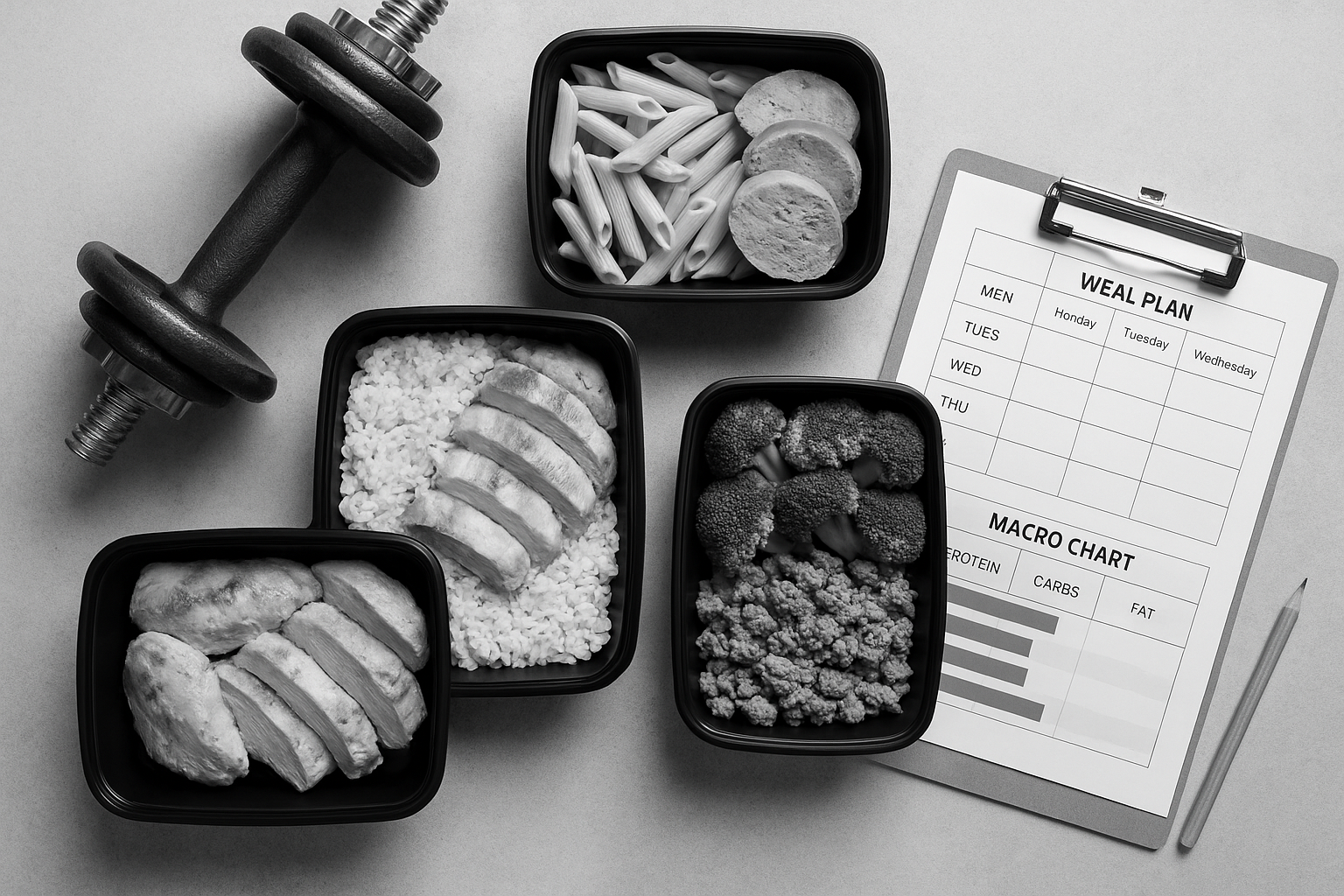
Lunch: Chicken Rice Bowl
- Chicken thigh/breast (or tofu/tempeh)
- Cooked rice (white or brown)
- Mixed veggies (fresh or frozen)
- Olive oil drizzle or avocado
- Salsa or low-sugar sauce for flavor
Scaling tip: Add an extra cup of rice or another tablespoon of olive oil to boost calories without adding much volume.
Snack: Greek Yogurt Power Bowl
- Greek yogurt (or skyr)
- Honey or maple syrup (optional)
- Granola or cereal
- Fruit + chia seeds
Budget option: Cottage cheese + fruit + crackers works similarly.
Dinner: Lean Protein + Potatoes
- Lean ground beef/turkey (or salmon, or lentils)
- Potatoes (baked/mashed) or pasta
- Vegetables sautéed in olive oil
Why it works: A big, satisfying meal with ample carbs supports recovery and makes it easier to maintain a surplus.
Before Bed (Optional): Slow-Digesting Protein
- Cottage cheese or casein protein shake
- Or milk + a piece of fruit
This can help you hit protein targets and reduce overnight hunger.
Step 4: Grocery List and Simple Meal Prep
Muscle gain is easier when your kitchen is stocked. Build your cart around a few staple proteins, carbs, and fats you enjoy.
Protein Staples
- Chicken, lean ground meat, eggs
- Greek yogurt, cottage cheese
- Fish (salmon, tuna), tofu/tempeh
- Protein powder (whey or plant-based)
Carb Staples
- Rice, oats, potatoes, pasta
- Bread/wraps, cereal/granola
- Fruit (bananas, berries, apples)
Fat and Flavor Staples
- Olive oil, avocado
- Nuts, nut butter, seeds
- Spices, salsa, soy sauce, low-sugar marinades
Meal Prep Strategy (60–90 Minutes)
- Batch-cook 2 proteins (e.g., chicken + ground turkey) and 1–2 carbs (rice + potatoes).
- Use frozen vegetables for quick volume and micronutrients.
- Pre-portion snacks (yogurt, fruit, trail mix) so you don’t miss calories on busy days.
Common Mistakes That Stall Muscle Gain
- Not eating enough consistently: Missing calories on “busy” days can erase your surplus.
- Protein too low: Hitting calories without protein won’t maximize muscle growth.
- Too much junk, not enough nutrients: You can gain weight but feel sluggish and underperform in training.
- No tracking or feedback loop: Weigh yourself 3–5 mornings per week and look at weekly averages.
- Ignoring hydration and sleep: Poor recovery makes progressive overload harder.
Conclusion: Your Best Meal Plan Is the One You Can Repeat
A successful meal plan for muscle gain is simple: a small calorie surplus, consistent protein at each meal, carbs to power training, and enough healthy fats to stay satisfied. Start with the sample day above, repeat it through the week, and adjust portions every couple of weeks based on body weight, strength progress, and how you feel.