Why meal prep makes healthy eating easier
Healthy eating often breaks down at the same moment: when you’re tired, hungry, and short on time. Meal prep solves that problem by moving decisions and cooking to a calmer part of your week. Instead of asking “What should I eat?” three times a day, you create a small set of ready-to-go options that fit your goals.
Done well, meal prep helps you:
- Eat more consistently by keeping balanced meals within reach.
- Control portions without feeling restricted.
- Reduce food waste by using what you buy.
- Save money by relying less on takeout and impulse groceries.
- Lower stress during busy weekdays.
The best part: meal prep doesn’t have to mean eating the same thing every day. A flexible plan can give you variety while still keeping your week simple.
Choose your meal prep style
There isn’t one “right” way to prep. Pick the style that matches your schedule, cooking comfort, and how much variety you want.
Batch cooking (full meals)
You cook complete meals ahead of time and portion them into containers. This is ideal if you want maximum convenience during the week. Think: chili, curry, stir-fry, or sheet-pan chicken and vegetables.
Mix-and-match components
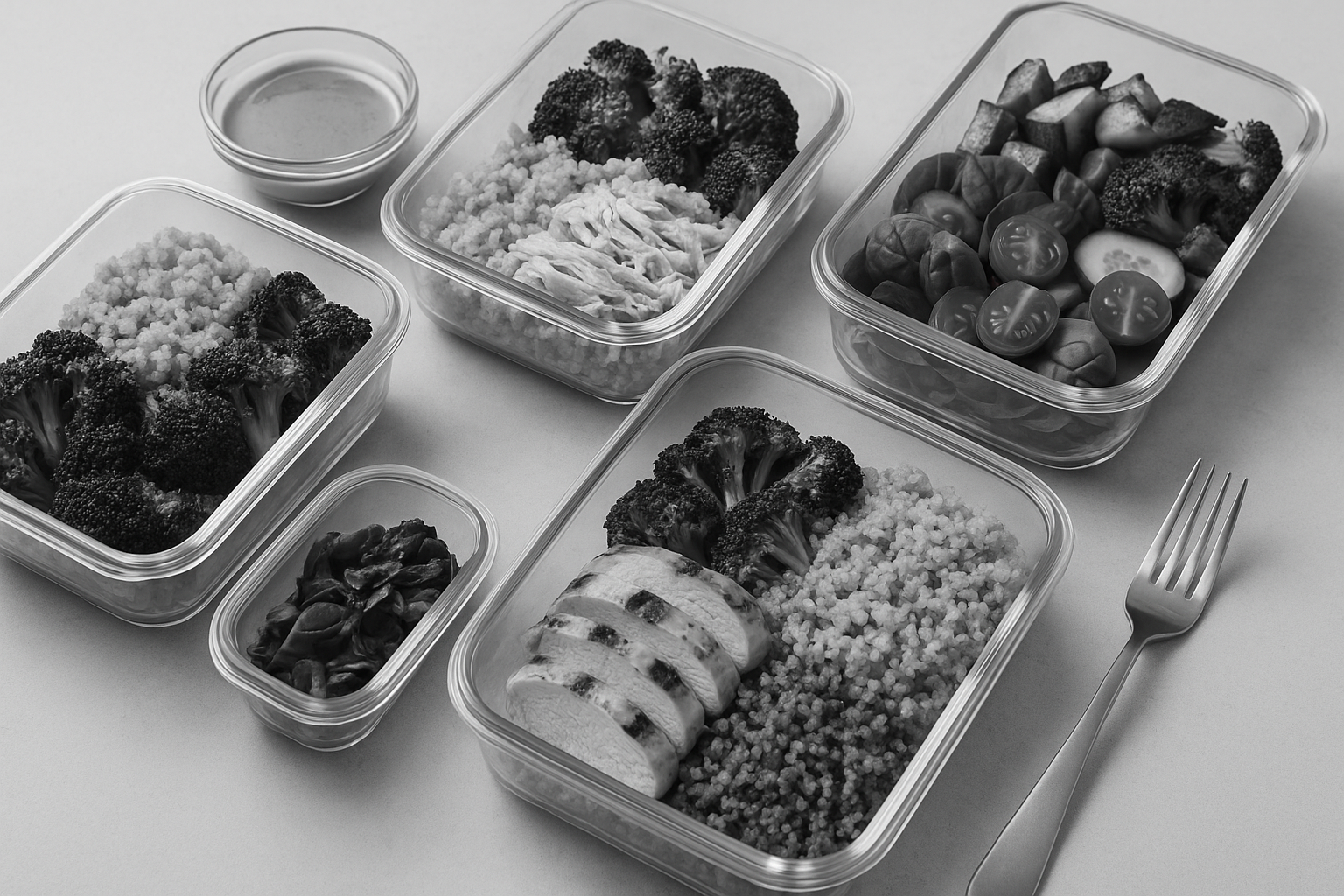
You prep building blocks—proteins, grains, roasted veggies, and sauces—then assemble different meals in minutes. This is great for people who get bored easily. One set of components can turn into bowls, wraps, salads, or pasta dishes.
Prep just the “hard part”
If you don’t want a big cooking day, prep only what slows you down: wash and chop produce, cook a pot of rice or quinoa, mix a dressing, or marinate protein. This approach still removes friction and makes healthy choices easier.
Plan a balanced menu (without overcomplicating it)
A solid meal prep plan starts with a simple structure. Aim to include:
- Protein (supports fullness and muscle): chicken, turkey, fish, tofu, beans, Greek yogurt, eggs.
- Fiber-rich carbs (steady energy): oats, brown rice, quinoa, sweet potatoes, whole-grain pasta, legumes, fruit.
- Colorful vegetables (micronutrients and volume): leafy greens, peppers, broccoli, carrots, zucchini, tomatoes.
- Healthy fats (flavor and satisfaction): olive oil, avocado, nuts, seeds, tahini.
A practical way to keep portions balanced is the “plate method”: about 1/2 vegetables, 1/4 protein, and 1/4 carbs, plus a bit of healthy fat. Adjust based on your hunger, activity level, and preferences.
Keep it manageable: choose 2 proteins, 2–3 vegetables, and 1–2 carb bases for the week. You’ll still get variety by changing seasonings and sauces.
Build your meal prep grocery list
Once you pick your meals or components, turn them into a tight shopping list. A helpful strategy is to shop by category:
- Proteins: chicken breast or thighs, salmon, tofu/tempeh, canned beans, eggs
- Vegetables: broccoli, bell peppers, spinach, onions, carrots (mix fresh + frozen)
- Carbs: oats, quinoa, brown rice, sweet potatoes, whole-grain wraps
- Fats & flavor: olive oil, nuts/seeds, hummus, salsa, low-sugar sauces
- Convenience items: bagged salad, frozen veg blends, pre-cooked lentils
For healthy meal prep, convenience foods can be a win—especially if they help you eat more vegetables and rely less on takeout.
Set up an efficient prep routine
A good meal prep session usually takes 60–120 minutes, depending on how much you cook. The key is to work in a logical order so multiple things finish around the same time.
Step-by-step meal prep workflow
- Start with grains and oven items: get rice/quinoa going and preheat the oven for sheet-pan meals.
- Chop vegetables: portion some for roasting and some for raw snacks or salads.
- Cook proteins: bake, sauté, or air-fry. Use a thermometer for consistency.
- Make a sauce or dressing: even one good sauce increases variety fast.
- Portion and label: date containers so you rotate meals easily.
Tip: Put on a timer for each cooking step and clean as you go. A tidy kitchen makes meal prep feel far less daunting.
Meal prep ideas for healthy eating
Here are a few simple, repeatable combinations that hold up well in the fridge and can be mixed and matched.
Breakfast options
- Overnight oats with berries, chia seeds, and Greek yogurt.
- Egg muffins (eggs + spinach + peppers) with fruit on the side.
- Yogurt parfait kits: portion yogurt, granola, and fruit separately to keep textures fresh.
Lunch and dinner options
- Sheet-pan chicken and vegetables: season chicken and roast with broccoli, onions, and peppers.
- Grain bowls: quinoa + roasted veggies + chickpeas + tahini-lemon sauce.
- Turkey chili loaded with beans and vegetables (freezes beautifully).
- Stir-fry kit: pre-chopped veggies + cooked protein + microwaveable rice + low-sugar sauce.
Snack prep
- Cut veggies (carrots, cucumbers, bell peppers) + hummus.
- Protein boxes: boiled eggs, cheese, fruit, nuts.
- “Grab and go” fruit: apples, oranges, grapes (washed and portioned).
Food safety and storage tips
Healthy meal prep only works if your food stays safe and tasty. A few basics go a long way:
- Cool quickly: don’t leave cooked food out for long periods. Portion into containers so it cools faster.
- Use airtight containers: glass containers resist stains and odors, but BPA-free plastic works too.
- Refrigerate smartly: most cooked meals are best within 3–4 days.
- Freeze extras: soups, stews, chili, cooked grains, and many proteins freeze well.
- Keep crunchy items separate: store dressings, croutons, nuts, and wet toppings apart until serving.
If something smells “off” or looks questionable, toss it. Consistency matters, but so does safety.
Common meal prep mistakes (and how to avoid them)
Meal prep should make your life easier, not create a fridge full of meals you don’t want to eat. Watch out for these common pitfalls:
- Prepping too much at once: start with 2–3 days of meals, then build up.
- Not adding enough flavor: rotate sauces and seasonings (pesto, salsa, curry paste, vinaigrettes, spice blends).
- Skipping variety in textures: include something fresh or crunchy (salad, slaw, cucumbers) alongside cooked items.
- Forgetting “emergency” options: keep quick backups like frozen veggies, canned beans, and microwaveable grains.
Conclusion
Meal prep for healthy eating is less about perfection and more about creating a simple system you can repeat. Choose a prep style that fits your week, plan a few balanced components, and keep flavors interesting with sauces and seasonings. With a little practice, you’ll spend less time deciding what to eat—and more time actually enjoying meals that support your goals.