Why Protein Matters for Muscle Growth
Protein is the primary dietary building block your body uses to repair and grow muscle tissue. Resistance training creates tiny disruptions in muscle fibers; in response, your body ramps up muscle protein synthesis (MPS)—the process of rebuilding those fibers bigger and stronger. To support that process, you need enough total protein, the right balance of essential amino acids (especially leucine), and an overall diet that supports training and recovery.
It’s also important to note that protein doesn’t work in isolation. Training provides the stimulus, protein provides the materials, and total calories, sleep, and consistency determine how well the process plays out over weeks and months.
How Much Protein Do You Need for Muscle Growth?
Protein needs vary based on body size, training volume, age, and whether you’re cutting, maintaining, or bulking. While the “one-size-fits-all” numbers are popular, the most useful approach is to think in ranges and adjust based on results (strength progression, body composition, recovery, and hunger).
General Daily Protein Targets (Evidence-Based Ranges)
For most people lifting weights regularly, these ranges are practical and widely supported by research and coaching experience:
- General muscle growth (most lifters): 1.6–2.2 g/kg of body weight per day (about 0.7–1.0 g/lb).
- Fat loss while maintaining muscle: 1.8–2.7 g/kg (about 0.8–1.2 g/lb), especially if you’re leaner or training hard in a calorie deficit.
- Beginners or casual lifters: Often do well near the lower end (around 1.6 g/kg) if calories and training are consistent.
- Older adults: May benefit from the higher end due to “anabolic resistance” (a reduced MPS response to protein).
Quick example: A 75 kg (165 lb) lifter aiming for growth might target 120–165 g of protein daily.
Does More Protein Always Mean More Muscle?
Not necessarily. Once you consistently hit an effective range, piling on extra protein tends to produce diminishing returns for hypertrophy. More can still be useful for appetite control during cutting or if it helps you reach your calorie target with minimally processed foods. But if extremely high protein crowds out carbs and fats, performance and recovery can suffer—especially for high-volume training.
Protein Timing: When Should You Eat Protein?
Total daily protein is the #1 priority, but timing can help you get more out of your intake—particularly if you train hard or want to optimize recovery.
How to Distribute Protein Across the Day
A strong, simple strategy is to spread protein fairly evenly across meals. This supports multiple “peaks” of MPS throughout the day.
- Aim for 3–5 protein-containing meals per day.
- Most people do well with 25–45 g of high-quality protein per meal (larger athletes may need more).
- Try to avoid having almost all your protein at dinner if your goal is maximizing muscle growth.
Pre- and Post-Workout Protein: What Matters Most
The idea of a tiny “anabolic window” is overstated, but protein around training is still helpful. A practical approach:
- Pre-workout: Eat a protein-rich meal 1–3 hours before training (for example, Greek yogurt with fruit, chicken and rice, or tofu stir-fry).
- Post-workout: Get another protein dose within about 0–2 hours after training—especially if you trained fasted or your pre-workout meal was small.
If you’re already eating enough protein across the day, your post-workout shake is convenient, not mandatory.
Protein Before Bed: Worth It?
For many lifters, a pre-bed protein snack can be a simple way to increase daily intake and support overnight recovery. Slower-digesting proteins (like casein-rich dairy) are often recommended, but what matters most is hitting your daily total. Options include cottage cheese, Greek yogurt, or a protein shake if that’s easier.
Protein Quality: What Are the Best Sources?
High-quality proteins provide all essential amino acids in adequate amounts and are easier to use for muscle repair. You can absolutely build muscle with a mix of animal and plant proteins—the key is planning.
Animal-Based Protein Options
- Lean meats: chicken, turkey, lean beef, pork tenderloin
- Fish and seafood: salmon, tuna, cod, shrimp (bonus: omega-3s in fatty fish)
- Eggs: nutrient-dense and versatile
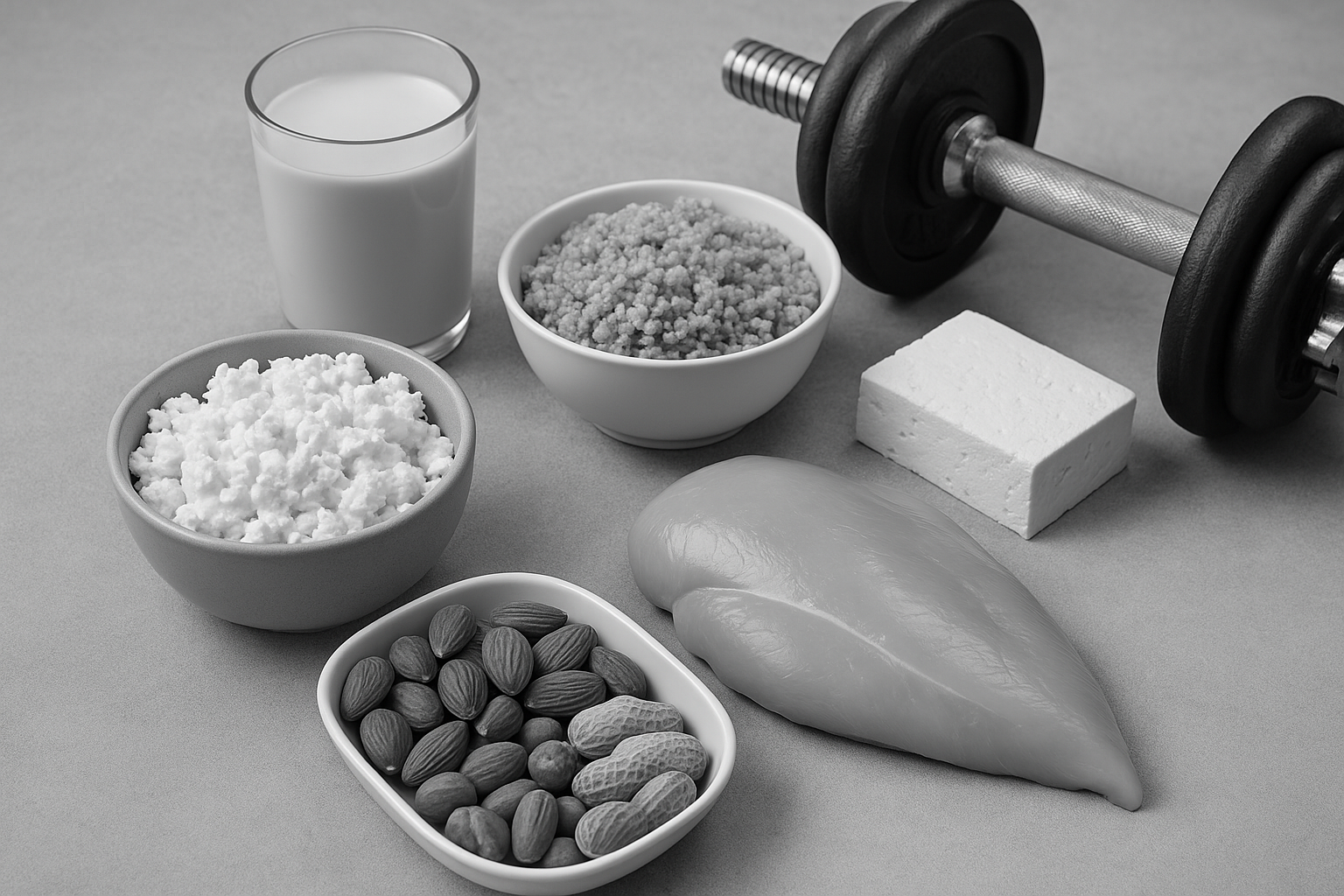
- Dairy: Greek yogurt, cottage cheese, milk, kefir
These sources are typically complete proteins and tend to be rich in leucine, a key amino acid involved in triggering MPS.
Plant-Based Protein Options (and How to Make Them Work)
- Soy foods: tofu, tempeh, edamame
- Legumes: lentils, chickpeas, beans
- Grains and pseudo-grains: quinoa, oats
- Seitan: very high protein (gluten-based)
- Plant protein powders: pea, soy, rice blends
Plant proteins can be slightly less dense in certain essential amino acids, so it helps to:
- Eat a variety of sources across the day (e.g., beans + rice, tofu + quinoa).
- Consider slightly higher total protein if your diet is mostly plant-based.
- Use convenient boosters like soy milk, edamame, or a quality plant protein powder to hit your targets.
Do You Need Protein Supplements?
Supplements are optional. Whole foods can cover your needs, but protein powders are an efficient tool when appetite, time, or budget gets in the way.
Whey vs. Casein vs. Plant Protein
- Whey: fast-digesting, high in leucine, convenient post-workout.
- Casein: slower-digesting, popular for evening intake.
- Plant blends: often combine sources (pea + rice) for a more complete amino acid profile.
Choose the option you tolerate well and will use consistently. Look for third-party testing if you want extra assurance about quality.
Common Mistakes That Limit Muscle Growth
- Only tracking “protein days” sporadically: consistency across weeks matters more than perfection on one day.
- Skimping on calories: building muscle is harder if you’re under-eating—especially carbs that support training performance.
- Relying on one giant protein meal: spreading intake usually works better for stimulating MPS multiple times per day.
- Ignoring sleep and recovery: even perfect macros can’t fully compensate for poor sleep.
- Assuming supplements replace training: progressive overload and adequate volume are still the drivers.
Practical Ways to Hit Your Protein Target
If you struggle to reach your daily goal, small changes add up quickly:
- Anchor each meal with a protein source (e.g., eggs at breakfast, chicken or tofu at lunch, fish at dinner).
- Use high-protein snacks like Greek yogurt, cottage cheese, jerky, edamame, or a shake.
- Upgrade staples: choose higher-protein bread/wraps, add lentils to pasta sauce, or mix protein powder into oats.
- Plan for busy days: keep easy options on hand (canned tuna/salmon, rotisserie chicken, tofu, protein bars you enjoy).
Conclusion
For muscle growth, aim for a consistent daily protein intake in the neighborhood of 1.6–2.2 g/kg, spread across 3–5 meals, and supported by hard training and adequate calories. Choose protein sources you enjoy, prioritize quality and variety, and use supplements only as a convenient tool—not a requirement. Do that consistently, and your nutrition will actively support the work you put in at the gym.