What “Qualified” Really Means in a Personal Trainer
Not all personal trainers bring the same level of education, experience, and professionalism to the gym floor. A qualified personal trainer is someone who can coach safely, communicate clearly, and build training plans that match your goals, fitness level, and health history. Qualification is more than a certificate on the wall—it’s a combination of proven knowledge, practical skill, ethical standards, and a commitment to ongoing learning.
When you work with a qualified trainer, you’re paying for structure, accountability, and risk management. The best trainers know how to progress you efficiently while reducing the chances of injury, burnout, or wasted time.
Key Qualifications to Look For
To find a trainer you can trust, start by evaluating a few core pillars: credentials, practical experience, and professional conduct.
Recognized Certifications and Education
A reputable certification indicates that a trainer has studied anatomy, exercise technique, program design, and basic coaching principles. Look for trainers who hold well-known, third-party accredited certifications (often aligned with national standards), and who can explain what their credential covers. Many excellent trainers also have formal education such as degrees in exercise science, kinesiology, or related fields.
While letters after a name aren’t the full story, they’re an important baseline. If a trainer can’t clearly describe their certification or obtained it through a quick online “weekend course,” that’s a reason to ask more questions.
CPR/AED and Safety Knowledge
Fitness coaching includes responsibility for client safety. A qualified personal trainer typically maintains current CPR/AED training and understands basic emergency procedures. They also know how to screen clients, identify red flags (like dizziness, chest pain, or unusual shortness of breath), and refer out when needed.
Specializations That Match Your Needs
Some goals require additional expertise. If you’re recovering from injury, training during pregnancy, managing chronic conditions, or preparing for a sport, look for relevant specializations and real experience in that area. For example, “strength and conditioning,” “pre/postnatal fitness,” “older adult training,” or “corrective exercise” may be useful—provided the trainer can show how they apply that knowledge.
Experience and Proven Coaching Skills
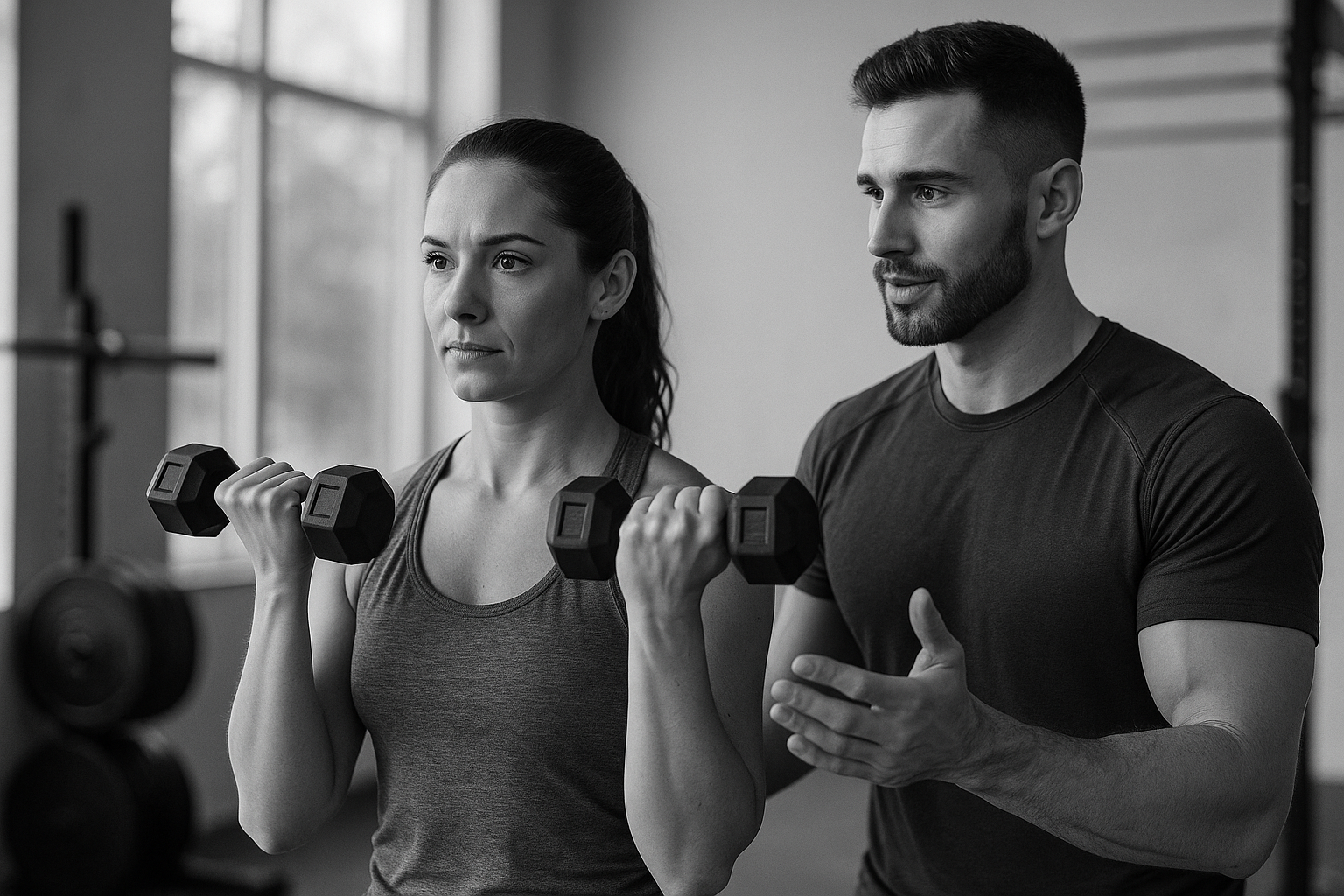
Experience doesn’t just mean years in a gym; it means results across different clients and the ability to adapt when something isn’t working. Qualified trainers coach movement, not just workouts. They can:
- Teach proper form with clear cues and regressions
- Adjust loads, volume, and intensity based on your recovery
- Progress exercises thoughtfully over time
- Explain the “why” behind the plan in simple terms
A great sign is a trainer who observes closely, asks questions, and makes targeted changes rather than running every client through the same routine.
Signs You’ve Found a Qualified Trainer (and Red Flags to Avoid)
Even before your first session, you can usually tell whether a trainer is professional and well-prepared. Use the signals below to guide your decision.
Positive Signs
- They start with an assessment: They ask about goals, health history, injuries, lifestyle, sleep, and stress—and may do a movement or fitness assessment.
- They prioritize technique: They coach form, breathing, and control before pushing intensity.
- They personalize training: Sessions match your abilities, preferences, and schedule, and evolve as you progress.
- They set realistic expectations: They discuss timelines honestly and focus on habits and consistency.
- They communicate well: You understand the plan, and you feel respected and supported.
Common Red Flags
- One-size-fits-all plans: Everyone gets the same workout regardless of goals or limitations.
- Extreme promises: Guaranteed rapid results or “quick fixes” without discussing sustainability.
- Poor boundaries: Pressure to buy supplements, follow restrictive diets, or train through pain.
- No progression strategy: Random workouts with no tracking or long-term structure.
- Dismisses your concerns: Ignores pain, fatigue, or anxiety about certain movements.
Questions to Ask Before You Hire a Personal Trainer
An initial consultation is your chance to interview the trainer. You’re not being difficult—you’re being smart. Here are practical questions that reveal real competence:
- What certifications do you hold, and are they current?
- Do you have CPR/AED training?
- How do you assess a new client? (Listen for health history + movement assessment.)
- How do you design programs and track progress? (Look for measurable metrics.)
- What’s your experience with my goal or situation? (Weight loss, strength, post-injury, etc.)
- How do you handle pain or limitations during training?
- What does success look like in 8–12 weeks? (Realistic, behavior-focused answers are best.)
If you’re deciding between two trainers, pay attention to who listens better and explains their process more clearly. Coaching is a relationship—trust and communication matter.
What to Expect From Working With a Qualified Personal Trainer
Qualified trainers don’t just “count reps.” They provide a system that helps you improve safely and consistently. While every trainer has their own style, you can typically expect:
- Clear goal-setting: You define outcomes (e.g., build strength, reduce back pain, run a 5K) and align them with your current reality.
- Structured programming: A plan that includes warm-ups, main lifts, accessory work, conditioning, and recovery—scaled to you.
- Technique coaching: You learn how to move well, not just move more.
- Progression and accountability: Loads, reps, and difficulty increase over time, with your trainer tracking the details.
- Education: You understand why you’re doing the work, which builds confidence and long-term independence.
The result is usually more than physical change. Many people gain consistency, better habits, and the ability to train without second-guessing every decision.
How to Verify Credentials and Choose Confidently
If you’re unsure, it’s okay to verify. A qualified personal trainer will welcome reasonable checks. You can:
- Ask for proof of certification and CPR/AED (many trainers keep digital copies)
- Request references or testimonials from clients with similar goals
- Observe a session (if the facility allows) to see coaching style and attentiveness
- Try a single session or short package before committing long-term
Most importantly, choose someone who makes you feel safe, heard, and motivated. Credentials matter, but so does the trainer’s ability to build a plan you can actually follow.
Conclusion
A qualified personal trainer combines credible education, safety awareness, hands-on coaching skill, and a professional approach to helping you reach your goals. By checking credentials, asking the right questions, and watching for red flags, you can find a coach who supports real progress—safely, efficiently, and with a plan that fits your life.