
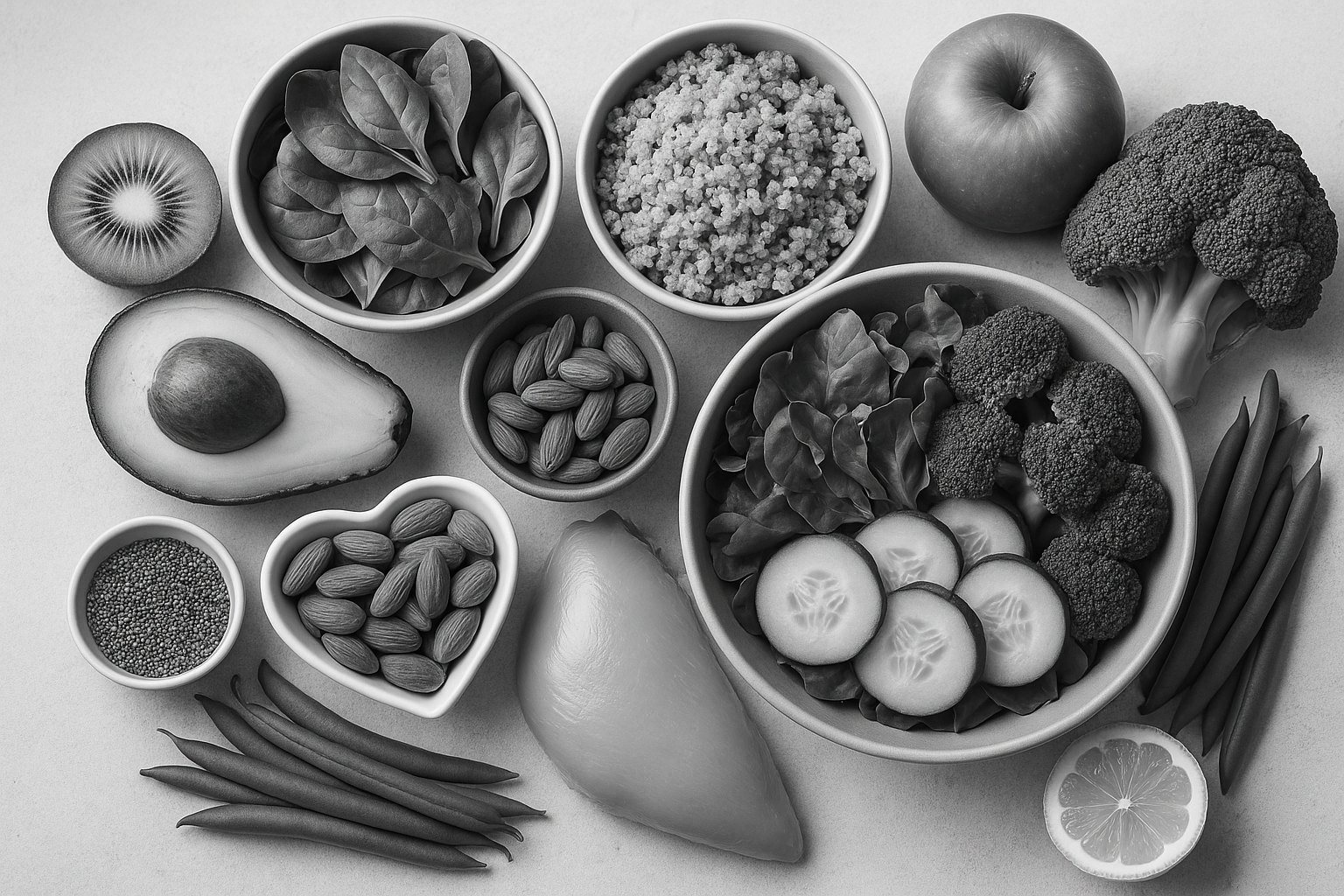
Why Food Choice Matters for a Healthy Diet
A healthy diet isn’t about perfection or cutting out entire food groups—it’s about building meals that consistently deliver the nutrients your body needs. The foods you choose influence your energy levels, mood, digestion, immune health, and long-term risk for conditions like heart disease and type 2 diabetes. The best approach is to focus on nutrient-dense staples (foods rich in vitamins, minerals, fiber, and healthy fats) while leaving room for flexibility and enjoyment.
Think of your diet as a pattern over time. When most of your meals are built from whole, minimally processed foods, it becomes easier to meet your nutrition needs without overthinking every bite.
Core Foods to Include in a Healthy Diet
Below are the building blocks of a balanced, satisfying eating pattern. You don’t need to eat all of these daily—aim for variety across the week.
1) Colorful Vegetables
Vegetables are one of the most reliable ways to increase fiber, antioxidants, and essential micronutrients with relatively few calories. Different colors generally signal different beneficial compounds, so variety is key.
- Leafy greens (spinach, kale, arugula): rich in folate, vitamin K, and carotenoids.
- Cruciferous vegetables (broccoli, cauliflower, Brussels sprouts): provide fiber and sulfur-containing compounds.
- Orange/red vegetables (carrots, peppers, tomatoes): high in vitamin C and carotenoids like beta-carotene and lycopene.
- Alliums (onions, garlic): add flavor while contributing beneficial plant compounds.
Easy ways to eat more: add a side salad, toss frozen vegetables into stir-fries, or roast a sheet pan of mixed veggies for the week.
2) Fruit (Whole, Not Just Juice)
Fruit provides fiber, hydration, and a wide range of vitamins and antioxidants. Whole fruit is generally more filling than juice because it retains fiber and takes longer to eat—both helpful for appetite regulation.
- Berries: especially high in antioxidants and fiber.
- Apples and pears: great for portable, high-fiber snacking.
- Citrus (oranges, grapefruit): rich in vitamin C and refreshing in salads.
- Bananas: convenient source of carbs and potassium, useful around workouts.
Tip: Pair fruit with protein or healthy fat (like yogurt or nuts) for longer-lasting fullness.
3) Whole Grains and High-Fiber Starches
Carbohydrates are an important energy source, and choosing high-fiber options can support digestion, steadier energy, and heart health. Whole grains contain more of the grain’s natural fiber and nutrients than refined grains.
- Oats: a budget-friendly breakfast staple; can be sweet or savory.
- Brown rice, quinoa, barley: versatile bases for bowls and salads.
- Whole wheat (bread, pasta): look for “100% whole wheat” on the label.
- Potatoes and sweet potatoes: nutritious, satisfying starches—especially with the skin.
Quick idea: Build a grain bowl with cooked quinoa, roasted vegetables, beans, and a simple lemon-olive oil dressing.
4) Protein Foods (Plant and Animal Options)
Protein supports muscle maintenance, recovery, and satiety. Including a protein source at meals can help you feel satisfied and keep energy more consistent.
- Legumes (beans, lentils, chickpeas): provide protein plus fiber; excellent for heart health.
- Fish (salmon, sardines, trout): a top source of omega-3 fats; aim for a couple times per week if you enjoy it.
- Poultry and lean meats: choose minimally processed options and balance portions with vegetables.
- Eggs: affordable, versatile protein for any meal.
- Tofu, tempeh, edamame: plant proteins that work well in stir-fries, bowls, and salads.
- Greek yogurt, cottage cheese: convenient high-protein options that also provide calcium.
Practical target: Try to include a protein food at breakfast, lunch, and dinner (and snacks if needed).
5) Healthy Fats
Dietary fat isn’t the enemy—healthy fats help with hormone production, brain function, and absorption of fat-soluble vitamins (A, D, E, and K). The goal is to prioritize unsaturated fats and keep highly processed trans fats out of your routine.
- Extra-virgin olive oil: a staple for dressings and low-to-medium heat cooking.
- Avocados: add creaminess to meals while providing fiber and potassium.
- Nuts and seeds (walnuts, almonds, chia, flax, pumpkin seeds): great for snacks and toppings.
- Nut butters: choose options with minimal added sugar and oils.
Simple upgrade: Sprinkle chia or ground flax into oatmeal or yogurt for added fiber and healthy fats.
6) Fermented and Gut-Friendly Foods
A healthy diet supports a healthy gut. Fermented foods can contribute beneficial bacteria, and fiber-rich plant foods help feed them. Not everyone needs large amounts of fermented foods, but small, consistent servings can be a helpful addition.
- Yogurt with live cultures
- Kefir
- Sauerkraut, kimchi (watch sodium if you’re sensitive)
- Miso, tempeh
Try this: Add a spoonful of sauerkraut to a grain bowl or serve yogurt alongside fruit and nuts.
How to Build a Balanced Plate
If you want a simple framework, aim to build most meals around:
- Half the plate: non-starchy vegetables (salad, roasted vegetables, sautéed greens)
- One quarter: protein (beans, fish, chicken, tofu, eggs)
- One quarter: high-fiber carbs (whole grains or starchy vegetables)
- Add: a small portion of healthy fat (olive oil, nuts, avocado) and something flavorful (herbs, spices, citrus)
This approach naturally increases fiber and nutrients while keeping meals enjoyable and filling. Adjust portions based on your hunger, activity level, and health goals.
Healthy Snack Ideas Using Whole Foods
Snacks can be a smart way to add nutrients—especially if you pair protein and fiber for staying power.
- Apple or pear with peanut butter
- Greek yogurt with berries and a sprinkle of nuts
- Hummus with carrots, cucumbers, and bell peppers
- Hard-boiled eggs with cherry tomatoes
- Trail mix made with nuts, seeds, and a small amount of dried fruit
Common Mistakes to Avoid
- Over-focusing on single “superfoods”: Overall patterns matter more than any one ingredient.
- Cutting too many foods at once: Sustainable changes usually happen gradually.
- Missing protein and fiber at meals: This can lead to low energy and frequent hunger.
- Relying heavily on ultra-processed foods: They can crowd out more nutrient-dense options.
Conclusion
The best foods for a healthy diet are the ones you can enjoy consistently: plenty of vegetables and fruits, high-fiber carbs, quality protein sources, and healthy fats. Start with a few small upgrades—add an extra serving of vegetables at dinner, swap in a whole grain, or include a protein-rich breakfast—and build from there. Over time, these simple choices add up to better energy, stronger nutrition, and meals you actually look forward to.