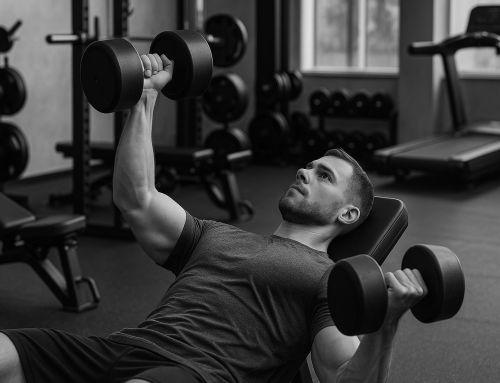
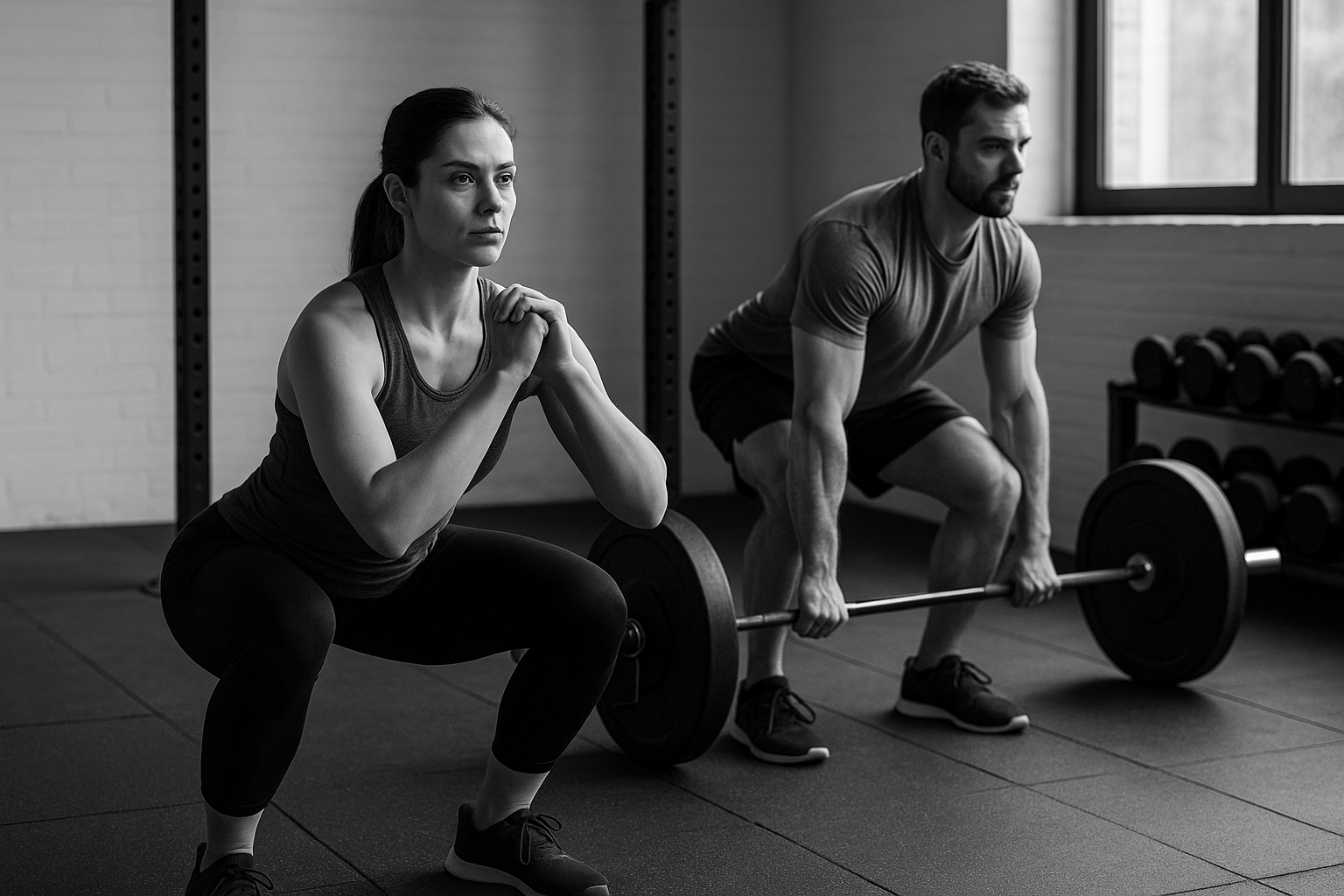
Why a Full Body Workout Routine Works
A full body workout routine trains all the major muscle groups in one session—typically using a mix of compound lifts (movements that work multiple muscles at once) and a few targeted accessories. It’s one of the most efficient ways to build strength, gain muscle, and improve overall fitness because you practice key movement patterns frequently without needing a complicated split.
Full body training is especially effective if you:
- Have 2–4 days per week to lift
- Want a balanced approach (legs, push, pull, core in one session)
- Prefer shorter, more focused workouts
- Want steady progress without overthinking your program
Who This Routine Is Best For
This full body workout routine is ideal for beginners through intermediate lifters. Beginners benefit from higher practice frequency on fundamental exercises, while intermediates can still progress by adjusting volume, intensity, and exercise variations.
You’ll need access to either:
- A gym (barbells, dumbbells, machines), or
- A basic home setup (dumbbells and a bench), with substitutions included below
If you have an injury, are returning from a long break, or have medical limitations, consider checking with a qualified professional before starting.
How to Structure Your Full Body Training Week
Most people do best with 3 full body sessions per week (for example: Monday/Wednesday/Friday). That schedule gives you enough frequency to improve, with recovery days in between.
Recommended weekly options
- 2 days/week: Full Body A / Full Body B (alternate)
- 3 days/week: Full Body A / B / A one week, then B / A / B the next
- 4 days/week: Two heavier days + two lighter/volume-focused days (advanced option)
Warm-Up (5–10 Minutes)
A good warm-up raises your body temperature, primes joints, and helps you lift better right away. Keep it simple and consistent.
Quick warm-up sequence
- 2–3 minutes: brisk walk, bike, rower, or jump rope
- Mobility: 8–10 reps each of bodyweight squats, hip hinges, arm circles, band pull-aparts
- Ramp-up sets: 2–4 lighter sets of your first lift before work sets
The Full Body Workout Routine (3 Days/Week)
This plan balances squat/hinge, push/pull, and core each day. Choose a load that allows you to keep 1–2 reps in reserve (stop just shy of failure) on most sets, especially when learning technique.
Day 1 (Full Body A: Squat Focus)
- Squat (back squat or goblet squat): 3–4 sets of 5–8 reps
- Bench press (barbell or dumbbell): 3–4 sets of 6–10 reps
- Row (cable row, barbell row, or one-arm dumbbell row): 3 sets of 8–12 reps
- Romanian deadlift (RDL) or hip hinge variation: 2–3 sets of 8–12 reps
- Plank (front or side): 2–3 rounds of 30–60 seconds
Optional finisher: 6–10 minutes of incline walking or light intervals if you want extra conditioning.
Day 2 (Full Body B: Hinge Focus)
- Deadlift (trap bar or conventional) OR hip thrust: 3–5 sets of 3–6 reps (deadlift) or 3–4 sets of 6–10 reps (hip thrust)
- Overhead press (barbell or dumbbell): 3–4 sets of 6–10 reps
- Lat pulldown or pull-ups: 3 sets of 6–12 reps
- Split squat or walking lunge: 2–3 sets of 8–12 reps per leg
- Carry (farmer’s carry): 3–4 walks of 20–40 meters
Optional: Add 1–2 sets of calf raises (12–20 reps) if calves are a priority.
Day 3 (Full Body A2: Volume + Balance)
- Front squat or leg press: 3–4 sets of 8–12 reps
- Incline dumbbell press or push-ups (weighted if strong): 3 sets of 8–12 reps
- Chest-supported row or seated row: 3 sets of 10–15 reps
- Hamstring curl or RDL (lighter): 2–3 sets of 10–15 reps
- Core (dead bug, cable crunch, or Pallof press): 2–3 sets of 10–15 reps
This third day leans slightly more toward higher reps for a joint-friendly hypertrophy stimulus while still training the full body.
Progression: How to Keep Getting Stronger
A routine only works if it progresses. Use a straightforward approach so you don’t stall.
Simple “double progression” method
- Pick a rep range (example: 6–10 reps).
- Use the same weight until you can hit the top end of the range on all sets with good form.
- Increase weight by the smallest amount available (2–5 lb for upper body, 5–10 lb for lower body) and repeat.
Also plan a lighter week every 4–8 weeks (reduce weights by ~10–15% or cut 1 set per exercise) if you feel run-down.
Rest Times and Workout Duration
Most full body sessions can fit into 45–70 minutes, depending on rest periods and how many accessories you include.
- Big compound lifts: rest 2–3 minutes
- Accessory lifts: rest 60–90 seconds
- Core and carries: rest as needed to maintain quality
If time is tight, superset a push and pull (for example: bench press + row) while keeping form strict.
Common Mistakes to Avoid
- Doing too much, too soon: Start with fewer sets and add volume only when recovery is solid.
- Skipping lower body: A true full body workout routine includes squats/lunges and hinges every week.
- Training to failure constantly: Leave a rep or two in the tank for better recovery and more consistent progress.
- Ignoring technique: If form breaks down, reduce load and build the pattern.
- No tracking: Write down sets, reps, and weights—progress requires feedback.
Exercise Substitutions (Gym or Home)
No single exercise is mandatory. Swap based on equipment and comfort while keeping the same movement pattern.
Swap options by movement pattern
- Squat: back squat → goblet squat → leg press → split squat
- Hinge: deadlift → trap bar deadlift → RDL → hip thrust
- Horizontal push: bench press → dumbbell press → push-ups
- Vertical push: overhead press → dumbbell shoulder press → pike push-ups
- Pull: rows/pulldowns → pull-ups/band pulldowns → dumbbell rows
Conclusion
A full body workout routine is one of the most time-efficient ways to build strength, muscle, and overall fitness. Train 3 days per week, focus on the big movement patterns, track your lifts, and progress gradually. Stick with the plan for 8–12 weeks, and you’ll have a strong foundation you can build on for years.