
Introduction
Healthy eating habits aren’t about strict rules, cutting out entire food groups, or chasing “perfect” meals. They’re simple, repeatable choices that help you feel energized, satisfied, and supported—day after day. The most sustainable approach focuses on balance, consistency, and flexibility, so you can eat well at home, at work, and when life gets busy.
Below is a practical guide to building healthy eating habits you can actually stick with, without overcomplicating your plate.
What Healthy Eating Habits Really Mean
At its core, healthy eating means choosing foods that support your overall health—physical, mental, and emotional—most of the time. It’s less about “good” or “bad” foods and more about patterns.
Balance Over Perfection
One meal rarely makes or breaks your health. What matters is the bigger picture: how you eat across days and weeks. A balanced approach includes a variety of foods—vegetables and fruits, whole grains, protein sources, and healthy fats—while still leaving room for enjoyment.
Try thinking in terms of “often” and “sometimes” foods. If most meals are nourishing and satisfying, occasional treats can fit comfortably without guilt.
Consistency and Variety
Consistency helps your body get steady nutrients, while variety helps you cover a broader range of vitamins, minerals, fiber, and phytonutrients. Eating the same few foods on repeat can work short-term, but mixing things up supports long-term health and keeps meals interesting.
Easy ways to add variety include rotating protein options (beans, fish, poultry, tofu), switching up whole grains (oats, brown rice, quinoa), and trying new produce each week.
Key Components of a Healthy Diet
A healthy diet isn’t one-size-fits-all, but most people benefit from a few foundational building blocks.
Whole Foods First
Whole foods—foods that are close to their natural state—tend to be more nutrient-dense and satisfying. Think fruits, vegetables, legumes, nuts, seeds, eggs, yogurt, fish, and whole grains. You don’t have to avoid packaged foods entirely, but centering meals around whole foods makes healthy eating much easier.
A helpful rule of thumb: build your meal around one or two whole-food ingredients, then use packaged items for convenience (like frozen vegetables, canned beans, pre-washed greens, or jarred sauce).
Balanced Macronutrients (Protein, Carbs, Fats)
Balanced meals generally include:
- Protein for fullness and muscle repair (chicken, fish, eggs, Greek yogurt, beans, lentils, tofu).
- Carbohydrates for energy, ideally from high-fiber sources (fruit, oats, brown rice, whole-grain bread, sweet potatoes).
- Healthy fats for hormone health and satisfaction (avocado, olive oil, nuts, seeds, fatty fish).
When meals feel “off,” it’s often because one of these is missing—like a salad without enough protein or fat, or a snack that’s mostly refined carbs.
Fiber, Vitamins, and Minerals
Fiber supports digestion, heart health, and stable energy. Many people feel better when they prioritize high-fiber foods such as beans, lentils, berries, pears, oats, chia seeds, and vegetables. Vitamins and minerals come along for the ride when you eat a wide range of colorful plants and quality protein sources.
A simple goal: include at least one fruit or vegetable at most meals, and aim for different colors across the week.
Practical Healthy Eating Habits to Build
Healthy eating becomes sustainable when it’s built into your routine. These habits are realistic, flexible, and effective.
Plan Simple Meals
Meal planning doesn’t have to mean hours in the kitchen. Choose a few easy, repeatable meals you enjoy and rotate them. For example:
- Breakfast: oats with fruit and nuts, or eggs with whole-grain toast
- Lunch: grain bowl with veggies and protein, or a hearty soup with salad
- Dinner: sheet-pan chicken and vegetables, or tofu stir-fry with brown rice
Keeping a short list of “default meals” reduces decision fatigue and makes healthy choices more automatic.
Practice Mindful Eating
Mindful eating means paying attention to your hunger and fullness cues, slowing down, and enjoying your food. It can help reduce overeating and increase satisfaction—even when meals are simple.
Try one small shift: eat without screens for the first five minutes of a meal, and notice taste, texture, and how hungry you actually feel.
Stay Hydrated
Hydration affects energy, digestion, and appetite. If you frequently feel tired or snacky, dehydration may be part of the picture. Water is a great default, but unsweetened tea, sparkling water, and water-rich foods (like cucumbers, soups, oranges, and melons) also help.
If plain water is boring, add lemon, berries, or mint for flavor.
Build a Healthy Plate
When you’re unsure what to eat, use a simple plate method:
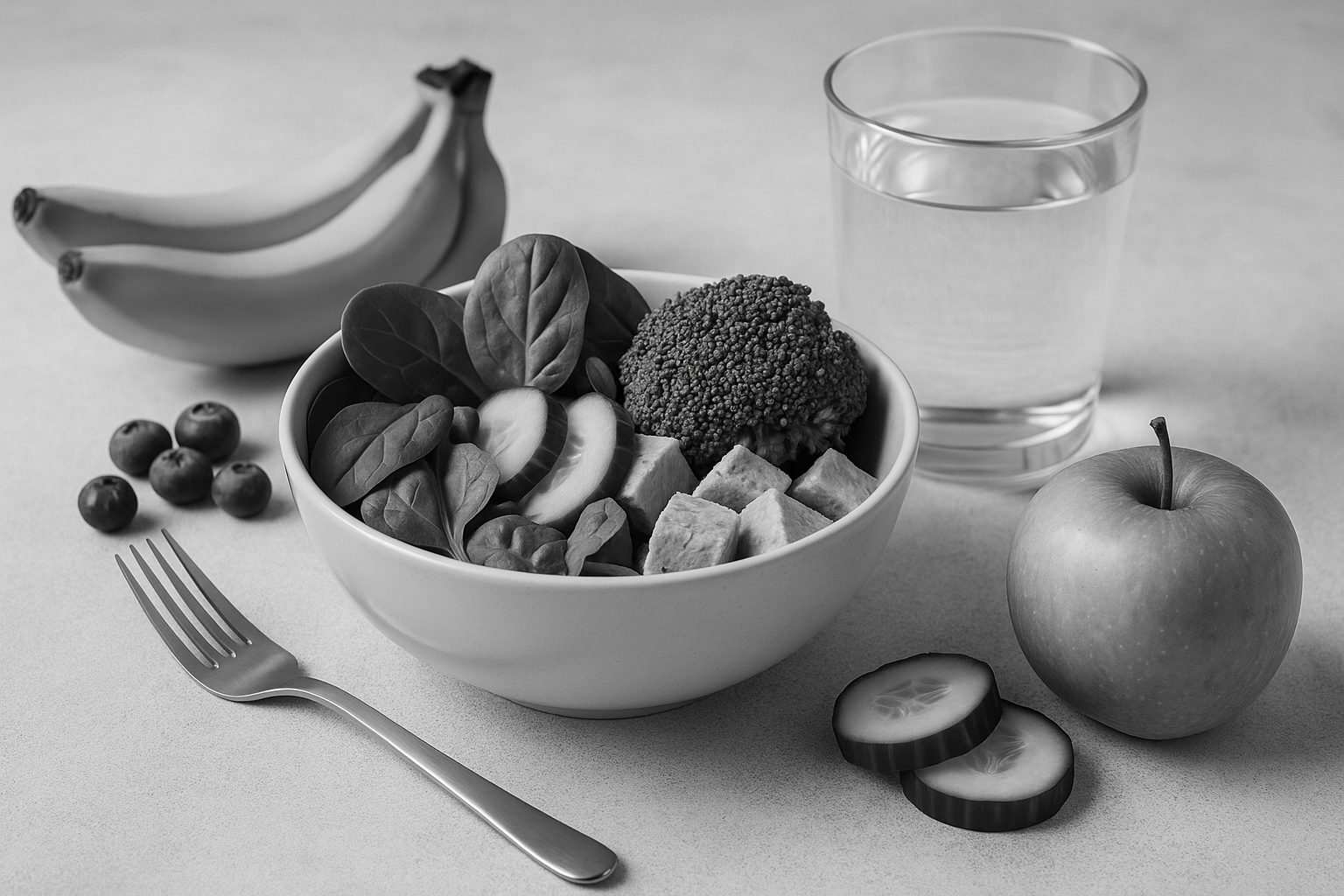
- Half the plate: non-starchy vegetables (salad greens, broccoli, peppers, carrots)
- One quarter: protein (fish, chicken, beans, tofu)
- One quarter: high-fiber carbs (brown rice, quinoa, potatoes, whole-grain pasta)
- Add: a small amount of healthy fat (olive oil, avocado, nuts, seeds)
This approach makes meals balanced without needing to track or measure everything.
Snack Smart
Smart snacks can stabilize energy and prevent arriving at meals overly hungry. Aim for a combination of protein and fiber, such as:
- Apple + peanut butter
- Greek yogurt + berries
- Hummus + carrots or whole-grain crackers
- Handful of nuts + a piece of fruit
If you snack often but still feel unsatisfied, consider increasing protein at meals or choosing snacks with more staying power.
Common Mistakes (and How to Avoid Them)
Many healthy eating efforts fall apart because of a few predictable pitfalls. The good news: they’re easy to fix once you spot them.
Over-Restricting
Cutting out too many foods can backfire, leading to intense cravings and an “all-or-nothing” cycle. Instead of focusing on what you can’t have, focus on what you can add: more vegetables, more protein, more fiber, and more water.
A balanced mindset is often more effective than strict rules.
Skipping Meals
Skipping meals might seem like a shortcut, but it can lead to low energy, irritability, and overeating later. If you’re not hungry in the morning, consider a lighter option—like yogurt, a smoothie, or a banana with nuts—rather than waiting until you’re ravenous.
Regular meals support stable blood sugar and steadier appetite throughout the day.
Relying on Ultra-Processed Foods
Ultra-processed foods can be convenient, but they’re often low in fiber and protein while being high in added sugars, refined grains, and sodium. You don’t need to eliminate them, but relying on them as the foundation of your diet can make it harder to feel satisfied and energized.
Try a “swap and upgrade” strategy: pair convenience foods with whole foods (like adding a bagged salad to a frozen meal, or tossing canned beans into a jarred pasta sauce).
Conclusion
Healthy eating habits are built one choice at a time. When you prioritize whole foods, balance your meals, stay hydrated, and create simple routines you enjoy, healthy eating becomes less of a project and more of a natural part of daily life. Start small, aim for progress over perfection, and let consistency do the heavy lifting.