
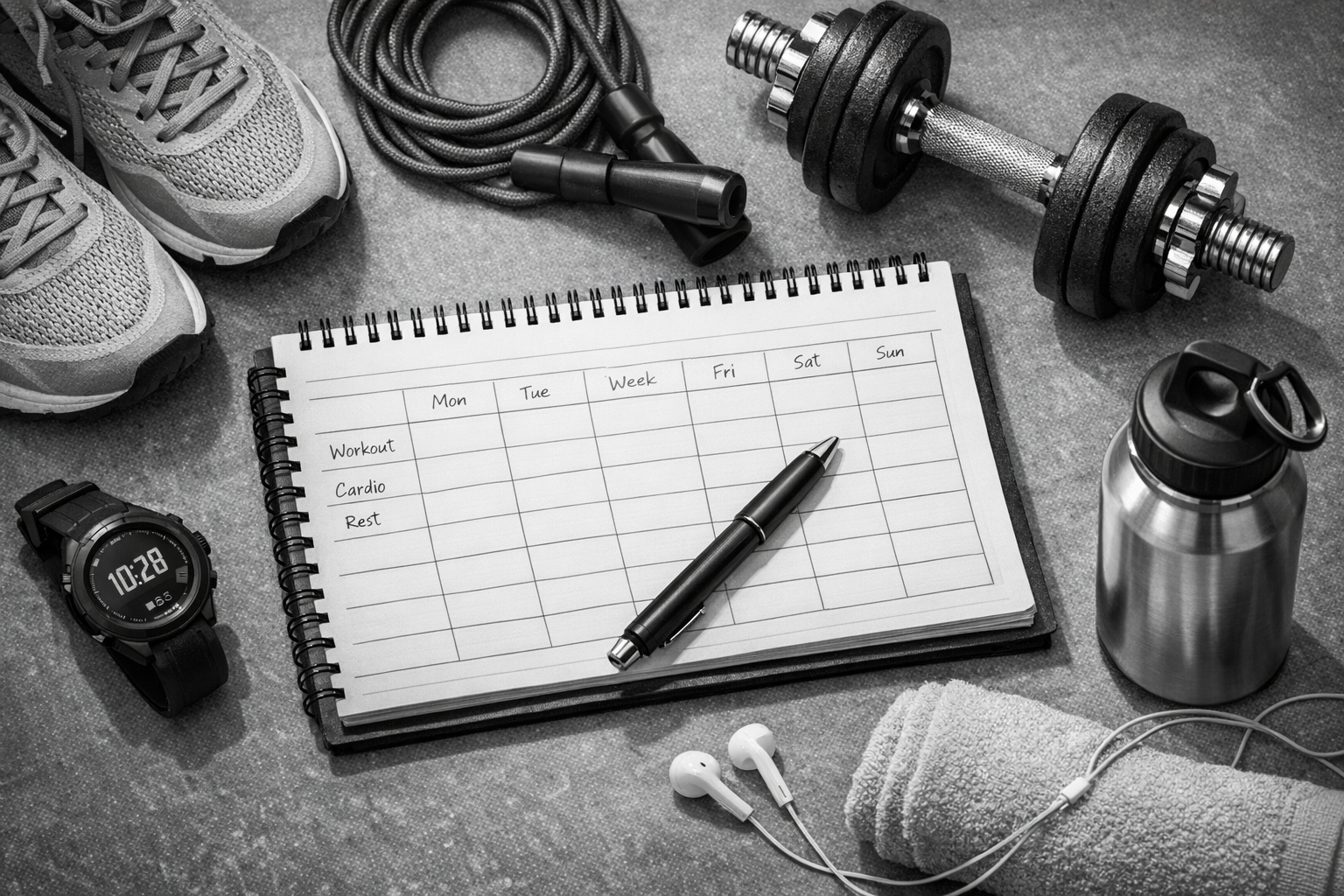
Why a Workout Schedule Matters
A workout schedule gives your fitness routine structure, consistency, and purpose. Instead of guessing what to do each day, you follow a plan that supports your goals, whether that’s losing weight, building muscle, improving endurance, or simply feeling healthier.
Without a schedule, it’s easy to skip workouts, repeat the same exercises too often, or train too hard without enough recovery. A smart weekly plan helps you stay motivated, track progress, and reduce the chance of burnout or injury.
How to Create the Right Workout Schedule
The best workout schedule is one you can follow consistently. Start by looking at your current fitness level, your available time, and your main goal. A beginner may need fewer days of training and more rest, while someone with experience may handle a more demanding routine.
Think about your weekly commitments first. A schedule should fit your real life, not the other way around. If you know you are busiest on weekdays, you may do shorter sessions on those days and longer workouts on weekends. If mornings work best for you, schedule workouts then to improve follow-through.
Also, be realistic about recovery. Your body gets stronger between workouts, not just during them. Mixing strength, cardio, mobility, and rest days creates a balanced plan that supports long-term progress.
Set Clear Goals
Before building your schedule, decide what you want most. Fat loss, muscle gain, improved cardiovascular health, better mobility, or stress relief all call for slightly different plans. A clear goal helps you choose the right workout type, frequency, and intensity.
For example, if muscle growth is your priority, strength training should be the foundation of your week. If endurance is the goal, you may include more running, cycling, swimming, or other aerobic sessions. If general health is your focus, a balanced mix of strength, cardio, and flexibility work is ideal.
Choose the Number of Workout Days
Most people do well with 3 to 5 workout days per week. Beginners often benefit from starting with 3 full-body sessions. Intermediate exercisers may prefer 4 days, while more experienced people may train 5 or 6 days with different muscle groups or workout styles.
The key is consistency. A simple schedule you can repeat every week is usually better than an ambitious plan you abandon after two weeks. If your energy is limited, start smaller and build up over time.
Balance Strength, Cardio, and Rest
A strong workout schedule includes more than just lifting weights or doing cardio. Strength training helps build muscle and support metabolism. Cardio improves heart health and endurance. Rest allows your muscles and nervous system to recover.
A common weekly structure might include two to four strength sessions, two cardio sessions, and one to two rest or active recovery days. Active recovery can include walking, stretching, yoga, or light cycling. This balance helps you train effectively without overdoing it.
Sample Workout Schedules for Different Fitness Goals
The right workout schedule depends on your goal and experience level. Here are a few simple examples you can adapt.
Beginner General Fitness Schedule
Monday: Full-body strength training
Tuesday: Light cardio or walking
Wednesday: Rest or mobility work
Thursday: Full-body strength training
Friday: Moderate cardio
Saturday: Full-body strength training or active recovery
Sunday: Rest
This type of schedule gives beginners enough practice to improve without creating excessive soreness or fatigue.
Muscle-Building Schedule
Monday: Upper body strength
Tuesday: Lower body strength
Wednesday: Rest or light cardio
Thursday: Upper body strength
Friday: Lower body strength
Saturday: Optional core or mobility work
Sunday: Rest
This split allows you to train each muscle group more than once per week while still leaving time for recovery.
Fat-Loss and Conditioning Schedule
Monday: Strength training
Tuesday: HIIT or brisk cardio
Wednesday: Strength training
Thursday: Moderate cardio or walking
Friday: Strength training
Saturday: Optional cardio or recreational activity
Sunday: Rest
This approach combines calorie-burning activity with muscle-building work, which can support body composition goals.
Tips to Stick With Your Workout Schedule
A great plan only works if you follow it. The most effective workout schedule is the one that becomes part of your routine. These simple strategies can help.
Plan ahead: Put workouts on your calendar like any other appointment.
Keep it simple: Shorter, focused sessions are easier to sustain than overly complicated routines.
Prepare in advance: Lay out clothes, pack your bag, or set up home equipment the night before.
Track your progress: Recording workouts helps you see improvement and stay motivated.
Be flexible: If you miss a session, adjust your week instead of quitting altogether.
It also helps to choose workouts you enjoy. If you dislike your routine, it will feel harder to stay consistent. Mix in activities you find fun, whether that is strength training, dance, hiking, cycling, or group classes.
When to Adjust Your Workout Schedule
Your workout schedule should change as your fitness improves. If your current plan feels too easy, you may need to increase the intensity, add another day, or change the exercises. If you feel constantly sore, tired, or unmotivated, your schedule may be too demanding.
Watch for signs that recovery is not enough, such as poor sleep, lingering muscle pain, low performance, or a lack of enthusiasm for training. In that case, reduce volume, add rest, or switch to a lighter week. Adjusting your plan is part of making progress, not a setback.
Conclusion
A thoughtful workout schedule helps you train with purpose, stay consistent, and reach your goals without feeling overwhelmed. Start with a plan that fits your lifestyle, keep it balanced, and make small adjustments as you grow stronger. The best schedule is the one you can repeat week after week.