Why Healthy Snacks Matter
Healthy snacks can make a big difference in how you feel throughout the day. When chosen well, they help steady energy levels, curb intense hunger, and make it easier to avoid overeating at meals. They can also bridge the gap between breakfast and lunch or support recovery after a workout.
The best snacks do more than fill you up quickly. They provide a helpful mix of nutrients such as protein, fiber, healthy fats, and complex carbohydrates. That combination keeps you satisfied longer and supports better focus, mood, and stamina.
What Makes a Snack Healthy?
A healthy snack is not defined by calories alone. Instead, it’s about balance and quality. Ideally, a snack should offer something your body can use, rather than a quick burst of energy followed by a crash.
Look for Nutrient Balance
Try to include at least two of the following in your snack: protein, fiber, or healthy fat. Protein helps with fullness, fiber supports digestion and stable blood sugar, and healthy fats can make a snack more satisfying.
Watch Portion Sizes
Even nutritious foods can add up if portions are too large. A handful of nuts, a cup of yogurt, or a piece of fruit with nut butter is often enough to satisfy between meals.
Limit Added Sugar and Excess Salt
Many packaged snack foods are heavily processed and loaded with sugar or sodium. Reading labels can help you choose options with simpler ingredients and better nutritional value.
Easy Healthy Snack Ideas
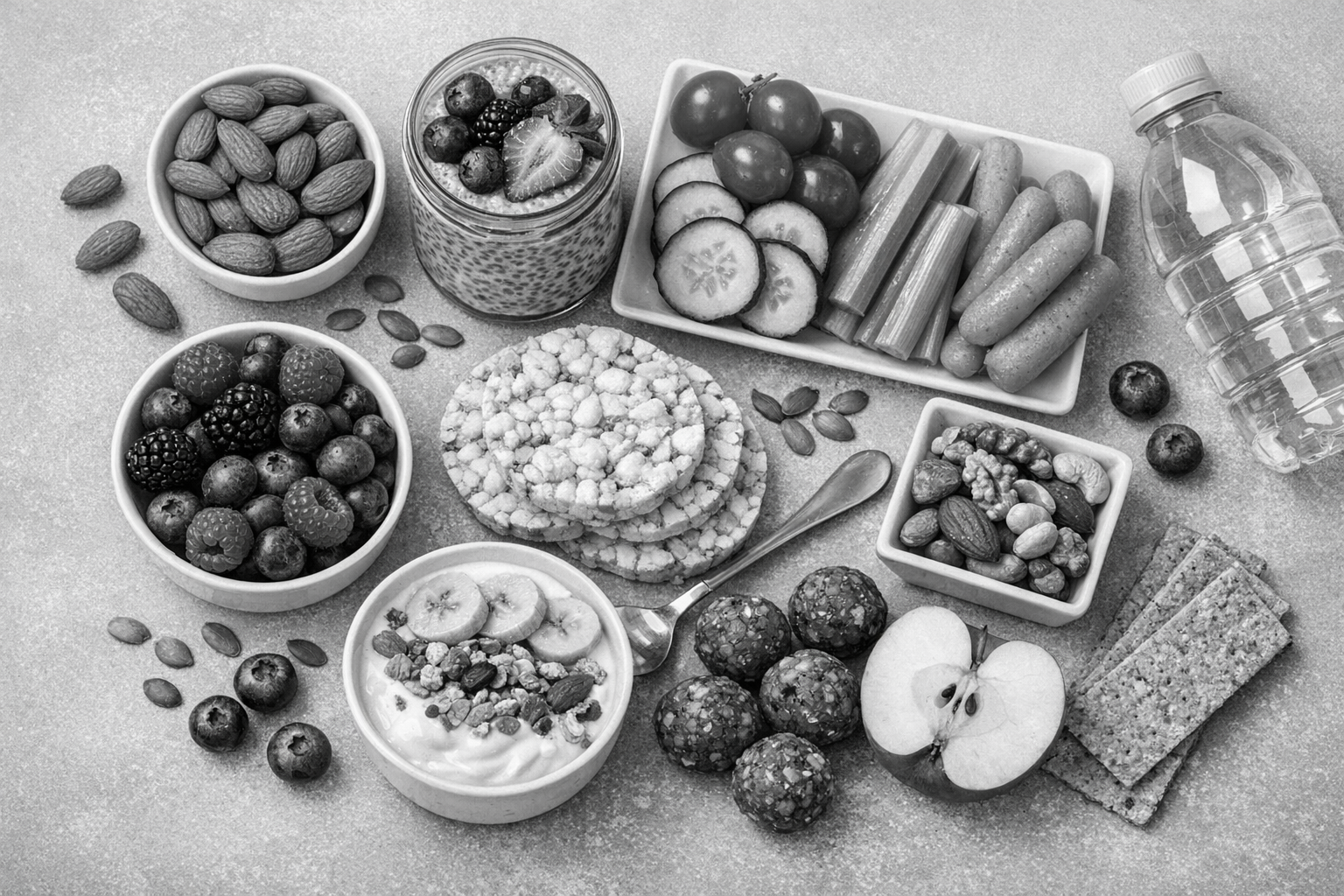
Healthy snacks do not need to be complicated or time-consuming. In fact, the most practical choices are usually the easiest to prepare.
Fresh Fruit with Protein
Apples with peanut butter, bananas with almond butter, or berries with Greek yogurt are classic combinations. Fruit adds natural sweetness and fiber, while protein makes the snack more filling.
Vegetables and Dip
Crunchy vegetables such as carrots, celery, cucumber, bell peppers, and snap peas pair well with hummus, tzatziki, or bean dip. This is an easy way to add more produce to your day without much effort.
Greek Yogurt Parfaits
Layer Greek yogurt with fruit and a sprinkle of oats, nuts, or seeds for a snack that feels a little more special. Choose plain or lightly sweetened yogurt to keep sugar under control.
Trail Mix Done Right
A homemade trail mix can be a smart option when made with nuts, seeds, and a small amount of dried fruit. Skip candy-heavy mixes and keep portions modest, since nuts are calorie-dense.
Whole-Grain Toast or Crackers
Pair whole-grain toast or crackers with avocado, cottage cheese, hummus, or nut butter. This adds fiber and satisfaction while keeping the snack balanced.
Hard-Boiled Eggs
Eggs are convenient, portable, and rich in protein. Keep a few hard-boiled eggs ready in the fridge for an easy grab-and-go option.
Healthy Snacks for Different Situations
The best snack often depends on where you are and what you need from it. A little planning can help you choose a snack that truly supports your day.
For Work or School
Choose snacks that are easy to pack and not too messy, such as nuts, fruit, yogurt cups, cheese sticks, or whole-grain crackers. These options are convenient and help keep you focused between meals.
For Pre-Workout Energy
If you need a snack before exercise, choose something easy to digest and rich in carbohydrates with a bit of protein. A banana, a small bowl of oats, or toast with peanut butter can work well.
For Post-Workout Recovery
After exercise, your body benefits from both protein and carbohydrates. Try chocolate milk, Greek yogurt with fruit, or a turkey sandwich on whole-grain bread for a more complete recovery snack.
For Late-Night Cravings
If you’re hungry at night, choose something light but satisfying, such as cottage cheese with berries, air-popped popcorn, or a small bowl of oatmeal. This may help you avoid reaching for ultra-processed convenience foods.
Tips for Making Healthy Snacking Easier
Healthy snacking becomes much simpler when your kitchen is set up for success. A few small habits can help you make better choices consistently.
Keep Healthy Options Visible
Place washed fruit, cut vegetables, yogurt, and nuts where they are easy to see. When healthy foods are within reach, you’re more likely to choose them.
Prep Snacks Ahead of Time
Wash produce, portion nuts, and assemble snack boxes in advance. Having ready-to-eat options on hand prevents last-minute decisions when you’re hungry.
Combine Convenience with Nutrition
You don’t need to make everything from scratch. Store-bought hummus, string cheese, single-serve yogurt, or pre-cut veggies can still be part of a healthy snacking routine.
Listen to Your Hunger
Snacking should respond to real hunger, not just boredom or stress. Pause and ask yourself whether you need food, water, rest, or a short break before reaching for a snack.
Healthy Snack Mistakes to Avoid
Even good intentions can lead to snacks that are less satisfying than expected. Avoiding a few common mistakes can make your snack choices more effective.
Choosing Only “Light” Foods
Foods labeled low-fat or low-calorie are not always filling. A snack without protein or fiber may leave you hungry soon after eating.
Overdoing Snack Portions
Snacks are meant to tide you over, not replace a full meal. Large portions of nuts, granola, or dried fruit can become more calorie-dense than expected.
Relying on Ultra-Processed Snacks
Many snack bars, chips, and packaged sweets are designed to be highly palatable, which can make them easy to overeat. Choose these occasionally, not as your main strategy.
Conclusion
Healthy snacks can support better energy, focus, and satisfaction throughout the day. By choosing balanced options, watching portions, and keeping convenient ingredients on hand, you can make snacking both enjoyable and nourishing.