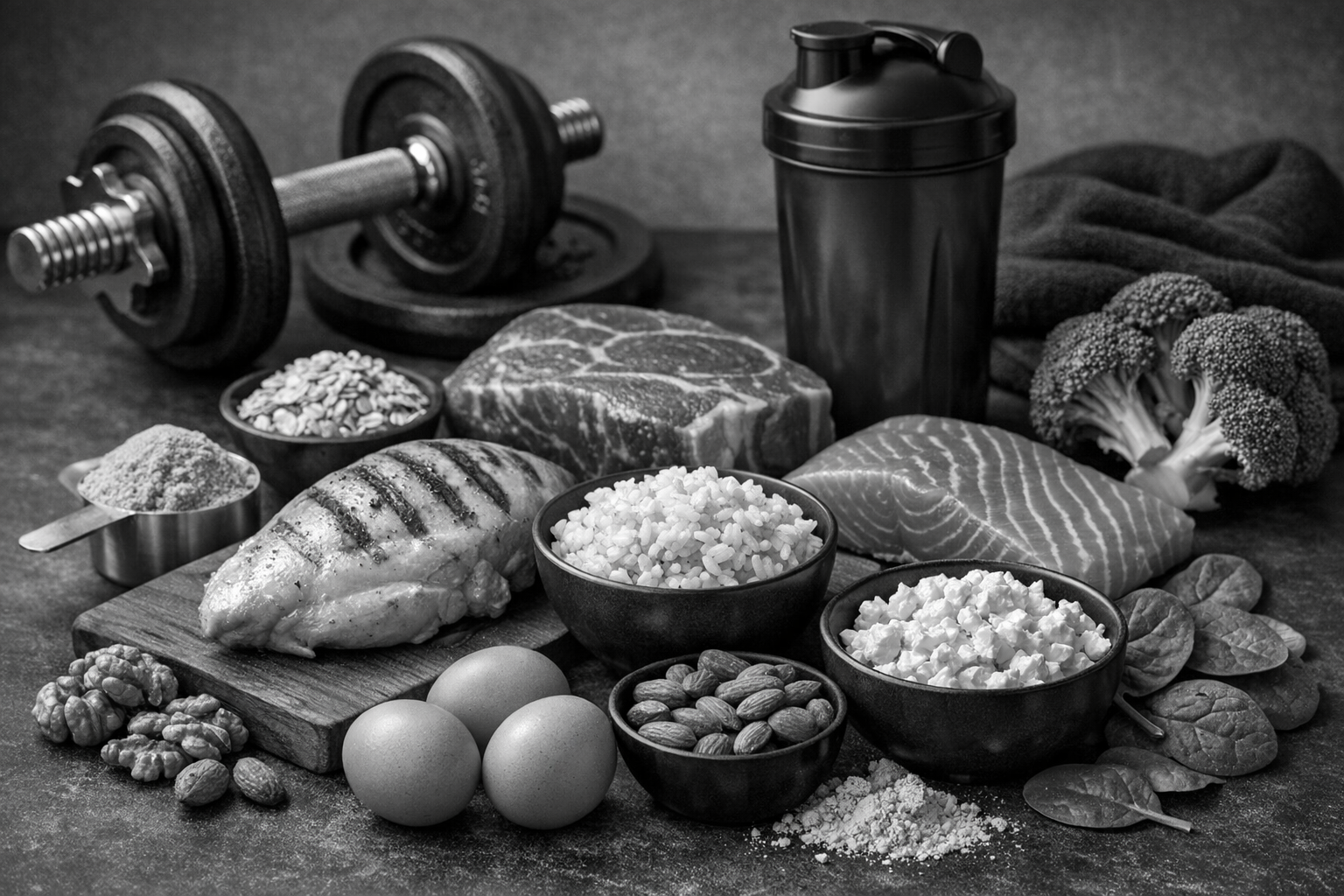
Why Diet Matters for Muscle Building
Building muscle is not just about lifting heavier weights. Your body needs the right fuel to repair muscle tissue, support recovery, and grow stronger over time. Training creates the stimulus, but diet provides the building materials. Without enough calories, protein, and key nutrients, progress can stall even with a solid workout plan.
A smart muscle-building diet helps you train harder, recover faster, and gain lean mass with less unwanted fat. The goal is not just to eat more, but to eat strategically.
Key Nutrients for Muscle Growth
Protein
Protein is the most important nutrient for muscle building because it supplies amino acids, which are used to repair and build muscle tissue. Good sources include chicken, turkey, beef, eggs, Greek yogurt, cottage cheese, fish, tofu, tempeh, beans, and lentils. Most people aiming to build muscle should include protein at every meal.
Carbohydrates
Carbs are often overlooked, but they are essential for muscle growth. They refill glycogen stores, which help power your workouts and improve recovery. Foods like oats, rice, potatoes, whole-grain bread, fruit, pasta, and beans provide the energy needed to train consistently and intensely.
Healthy Fats
Dietary fats support hormone production, including hormones involved in muscle growth and recovery. They also help with vitamin absorption and overall health. Include sources such as avocado, olive oil, nuts, seeds, fatty fish, and nut butters in balanced portions.
Micronutrients
Vitamins and minerals may not directly build muscle, but they are crucial for performance and recovery. Calcium, vitamin D, magnesium, potassium, iron, and zinc all play important roles in energy production, muscle contraction, and tissue repair. A varied diet rich in fruits, vegetables, whole grains, and quality protein sources helps cover these needs.
How Much to Eat for Muscle Gain
To build muscle, most people need to eat in a slight calorie surplus, meaning you consume a bit more than you burn. This gives your body enough energy to support new muscle tissue without excessive fat gain. A modest surplus is usually better than a large one because it promotes steadier lean gains.
Protein intake is especially important. A common guideline is to aim for roughly 1.6 to 2.2 grams of protein per kilogram of body weight each day. Spreading protein across three to five meals can help support muscle protein synthesis throughout the day.
Carbohydrate and fat needs vary based on body size, training style, and personal preference, but both should be included in enough quantity to support training performance and recovery.
Best Foods to Include in a Muscle-Building Diet
Lean Protein Sources
Lean proteins are convenient and efficient for muscle growth. Examples include chicken breast, turkey, lean beef, tuna, salmon, eggs, low-fat Greek yogurt, and cottage cheese. Plant-based eaters can rely on tofu, tempeh, edamame, seitan, lentils, chickpeas, and protein-rich grains.
Energy-Dense Carbs
Carbohydrates help you train hard and recover well. Great options include oatmeal, brown rice, quinoa, sweet potatoes, whole-grain pasta, whole-wheat bread, bananas, berries, and other fruits. These foods are especially useful around workouts because they provide quick and sustained energy.
Nutrient-Rich Fats
Healthy fats make it easier to reach your calorie goals while supporting overall health. Add avocado to meals, drizzle olive oil over vegetables, snack on almonds or walnuts, and use seeds such as chia or flax in smoothies and yogurt bowls.
Recovery-Friendly Foods
Some foods are especially helpful after training because they combine protein and carbohydrates. Good post-workout choices include a chicken and rice bowl, Greek yogurt with fruit, a turkey sandwich on whole-grain bread, or a smoothie with protein powder, banana, and oats.
Meal Timing and Meal Frequency
Meal timing is less important than overall daily intake, but it can still make a difference in performance and recovery. Eating a balanced meal with protein and carbs one to three hours before training can help fuel your workout. After training, another meal or snack with protein and carbs can support muscle repair and replenish energy stores.
Many people do well with three main meals and one to three snacks per day. Others prefer four to six smaller meals. The best meal pattern is the one that helps you consistently meet your calorie and protein goals.
Sample Muscle-Building Day of Eating
Breakfast: Oatmeal topped with berries, peanut butter, and Greek yogurt
Lunch: Grilled chicken, rice, and roasted vegetables with olive oil
Pre-workout snack: Banana and a protein shake
Post-workout meal: Salmon, sweet potato, and broccoli
Evening snack: Cottage cheese with fruit and almonds
This simple structure provides protein at multiple points throughout the day, along with enough carbs and fats to support energy and recovery.
Common Diet Mistakes to Avoid
One common mistake is eating too little. If your calorie intake is too low, muscle gain becomes much harder. Another mistake is relying on protein alone and neglecting carbs and fats. All three macronutrients matter.
Skipping meals, avoiding vegetables, and failing to hydrate can also limit progress. Hydration is especially important because even mild dehydration can affect performance and recovery. Finally, don’t expect perfection. Consistency over time matters far more than any single meal or day.
Conclusion
The best diet for muscle building is one that gives your body enough protein, carbs, healthy fats, and overall calories to grow and recover. Focus on nutrient-dense foods, eat consistently, and support your training with smart meal timing. With the right combination of food and exercise, you can build muscle more effectively and sustainably.