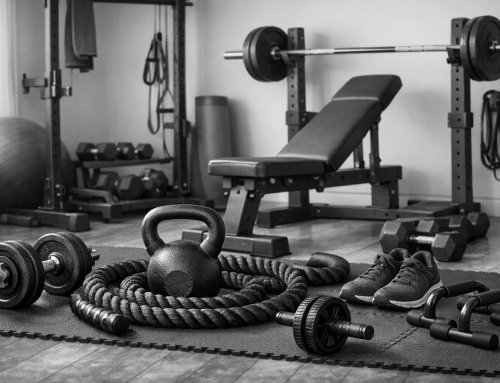

Building muscle is a process that rewards consistency, smart training, and patience. If your goal is to gain lean mass, the best workouts are not necessarily the hardest or longest—they are the ones that apply enough stimulus, recover well, and steadily progress over time. In this guide, you’ll learn how to structure your training for muscle gain, what exercises matter most, and how to avoid the common mistakes that slow progress.
What Muscle Growth Really Requires
Muscle growth, or hypertrophy, happens when you challenge your muscles enough that they adapt by becoming larger and stronger. To make that happen, your workouts need three things: mechanical tension, adequate volume, and progressive overload. In simple terms, that means lifting challenging weights, doing enough total work each week, and gradually increasing the demand over time.
Training alone is not enough. Muscle gain also depends on recovery, especially sleep and nutrition. Your body builds muscle between workouts, not during them, so a good plan balances hard training with enough rest to let your muscles repair and grow.
Best Workout Style for Muscle Gain
The most effective workout style for muscle gain typically combines compound lifts with accessory movements. Compound exercises work multiple joints and muscle groups at once, making them efficient for building size and strength. Accessory exercises help bring up weaker areas and add more training volume where needed.
A well-designed muscle-building routine usually includes moderate rep ranges, enough weekly sets, and a schedule that lets each muscle group recover. Most people do well training each muscle group two times per week, though beginners can grow well with slightly less.
Focus on Compound Lifts
Exercises like squats, deadlifts, bench presses, overhead presses, rows, and pull-ups should form the foundation of your program. These lifts recruit a large amount of muscle mass and allow you to use heavier loads, which is useful for building both strength and size. Compound lifts are also time-efficient, giving you more results per workout than isolation work alone.
Add Isolation Work Strategically
Once your major lifts are in place, include isolation exercises such as biceps curls, triceps extensions, lateral raises, leg curls, and calf raises. These movements are not the main driver of progress, but they help target muscles that need extra attention and can improve overall physique development. Think of them as the finishing work that supports a balanced program.
How to Structure Your Training Week
A good muscle-gain program should be simple enough to follow consistently and challenging enough to drive adaptation. One common approach is a push-pull-legs split, an upper-lower split, or a full-body routine repeated several times per week. The best choice depends on your schedule, experience, and recovery ability.
Beginners often benefit from full-body workouts three times per week because they can practice the main lifts often and recover well. More advanced lifters may prefer upper-lower or split routines that allow for greater weekly volume and exercise variety. No matter the format, aim to train each major muscle group with enough frequency to keep progress moving.
Weekly Volume Matters
For muscle gain, total weekly sets matter more than any single workout. A practical target for many lifters is about 10 to 20 hard sets per muscle group per week. “Hard sets” means sets taken close to failure, usually leaving one to three reps in reserve. If you do too little, growth may stall; if you do too much, recovery can suffer.
Use Progressive Overload
Progressive overload means gradually increasing the workload over time. You can do this by adding weight, increasing reps, adding sets, improving form, or reducing rest periods slightly. The easiest method for most people is to keep the same exercises for several weeks and try to lift a little more or do a few more reps each session.
Training Variables That Influence Muscle Gain
Several variables affect how effective your workouts are. Rep range is one of them. While muscle growth can happen across a broad range, many lifters find 6 to 12 reps effective for compound movements and 10 to 20 reps useful for smaller muscle groups and isolation work. What matters most is that the sets are challenging and performed with good technique.
Rest periods are another important factor. For big lifts, resting 2 to 3 minutes between sets helps you maintain performance and use enough load. For isolation movements, 60 to 90 seconds may be enough. Short rests can make workouts feel harder, but they may reduce the quality of later sets.
Exercise selection should also match your body and goals. If a movement causes pain or poor mechanics, swap it for a similar variation that you can perform safely and consistently. The best exercise is the one you can execute well and progress on over time.
Common Mistakes to Avoid
One of the biggest mistakes is doing random workouts without a plan. Muscle gain requires repeated exposure to key movements, not endless novelty. Another common issue is training too hard too often, which can limit recovery and slow progress. More effort is not always better if it leads to fatigue, poor form, or missed sessions.
People also underestimate the importance of nutrition. If you are not eating enough protein and total calories, your training results will be limited. Aiming for a slight calorie surplus and getting enough protein daily can make a major difference in how much muscle you build.
Finally, many lifters quit too early. Visible muscle gain usually takes months of consistent work, not days or weeks. Tracking your workouts, staying patient, and reviewing progress regularly will help you stay on track.
Sample Muscle-Building Workout
Here is a simple example of a workout focused on muscle gain:
- Barbell squat: 3 sets of 6–8 reps
- Bench press: 3 sets of 6–8 reps
- Barbell row: 3 sets of 8–10 reps
- Romanian deadlift: 3 sets of 8–10 reps
- Dumbbell shoulder press: 3 sets of 8–12 reps
- Lateral raise: 2 sets of 12–15 reps
- Biceps curl: 2 sets of 10–15 reps
- Triceps pushdown: 2 sets of 10–15 reps
This workout covers the major muscle groups while leaving room for recovery. Over time, try to improve the number of reps or the load while keeping form strong.
Conclusion
Working out for muscle gain is about doing the right things consistently: training with purpose, progressing gradually, and recovering well. Build your routine around compound lifts, add enough weekly volume, and stay patient as your body adapts. With a smart plan and steady effort, muscle growth becomes much more achievable.