Calories Needed for Muscle Gain: The Basics
If your goal is to build muscle, eating enough calories is just as important as lifting weights. Muscle growth requires energy, protein, and consistent training stimulus. In simple terms, you need to give your body a reason and the resources to add new tissue. That usually means eating in a calorie surplus, or consuming more calories than you burn each day.
Without enough calories, your body may struggle to recover from workouts, repair muscle fibers, and support growth. A small surplus helps create the ideal environment for muscle gain while minimizing unnecessary fat gain. The key is finding the right amount for your body, activity level, and training experience.
How a Calorie Surplus Supports Muscle Growth
Muscle tissue is metabolically expensive to build. When you train with resistance exercise, you create microscopic damage in your muscle fibers. During recovery, your body repairs those fibers and makes them stronger and larger, but that process requires extra energy. A calorie surplus provides the fuel needed for that repair and adaptation.
A common mistake is assuming that eating massively more will build muscle faster. In reality, a large surplus often leads to excess fat gain, not better muscle growth. A moderate surplus is usually the smartest approach because it supports muscle gain while keeping body fat in check.
How Many Calories Do You Need to Gain Muscle?
There is no one-size-fits-all number, but a good starting point is to eat about 250 to 500 calories above your maintenance level each day. Maintenance calories are the number of calories you need to stay at your current weight. If you eat above that amount consistently, you create the surplus needed for muscle gain.
Your ideal surplus depends on factors such as age, sex, body size, training status, and daily activity. Beginners may gain muscle with a smaller surplus, while very lean or highly active people may need more. If you are already carrying extra body fat, a smaller surplus is often enough to support lean gains.
A practical way to estimate your needs is to first determine your maintenance calories, then add a small surplus and monitor progress. If your weight is not increasing after two to three weeks, you may need to add another 100 to 200 calories per day.
Estimating Your Maintenance Calories
You can estimate maintenance calories by multiplying your body weight by a rough activity-based factor or by using a calorie calculator. Another simple method is to track your intake and body weight for one to two weeks. If your weight stays stable, your average intake is close to maintenance.
Once you know your maintenance level, increase your calories gradually. This approach gives you more control and helps you avoid unnecessary fat gain.
Factors That Affect Calorie Needs for Muscle Gain
Several variables influence how many calories you need to build muscle effectively:
- Body size: Larger individuals generally need more calories.
- Training volume: People who lift more often or perform high-volume workouts burn more energy.
- Daily movement: A physically active job or high step count increases calorie needs.
- Training experience: Beginners may build muscle more easily than advanced lifters and may not need a large surplus.
- Body composition goals: Leaner individuals often benefit from a more controlled surplus.
These factors make it important to personalize your calorie target instead of following a generic number. What works for one person may be too little or too much for another.
What to Eat Along With Those Calories
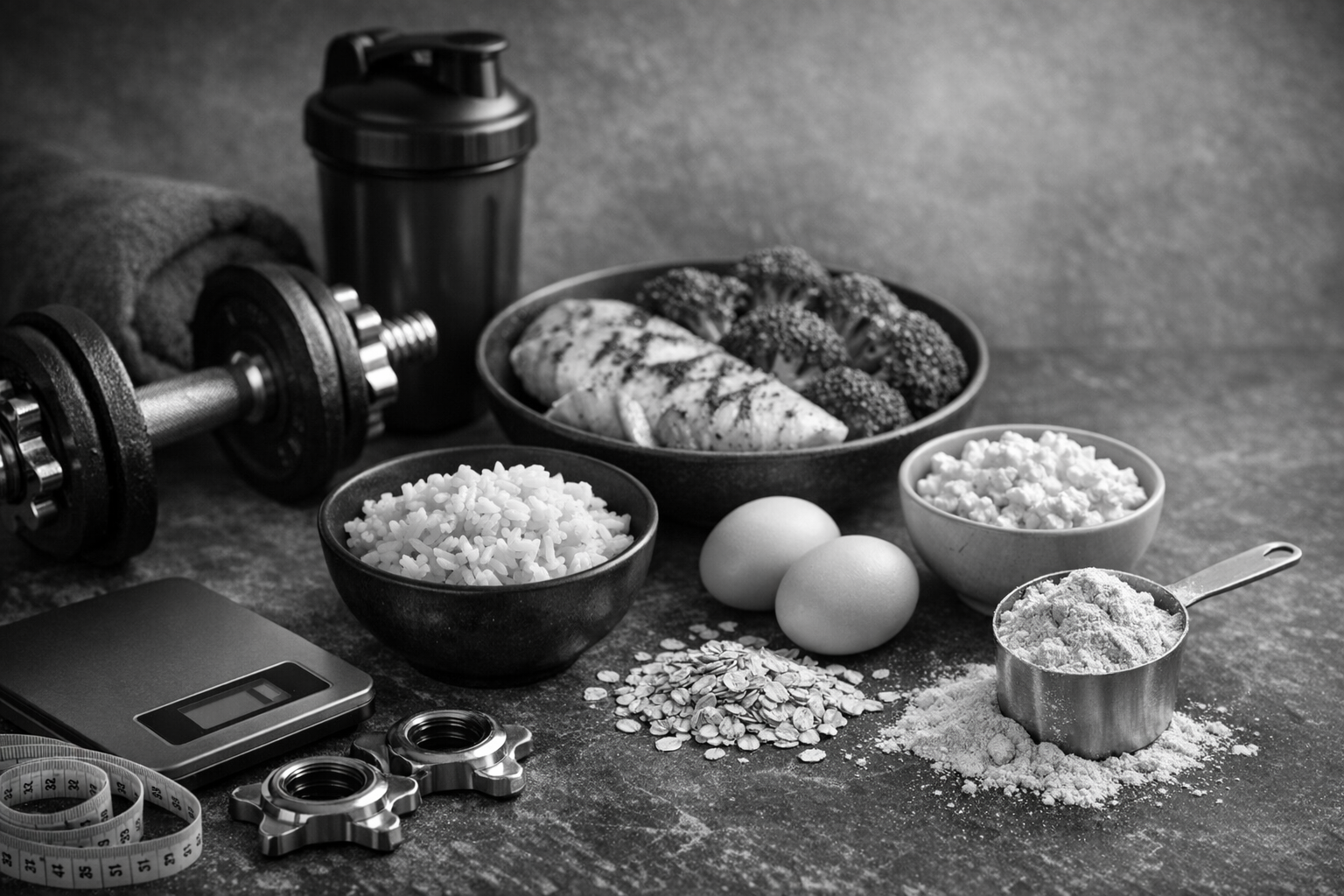
Calories matter, but the source of those calories matters too. To support muscle gain, your diet should include enough protein, carbohydrates, and healthy fats. Protein is especially important because it provides the building blocks for muscle repair and growth. Aim for roughly 0.7 to 1.0 grams of protein per pound of body weight per day, depending on your goals and preferences.
Carbohydrates help fuel hard workouts and replenish muscle glycogen, which supports performance and recovery. Fats are important for hormone function, brain health, and overall calorie intake. The best muscle-building diet includes a mix of nutrient-dense foods such as lean meats, eggs, dairy, rice, oats, potatoes, fruit, vegetables, nuts, seeds, and olive oil.
Instead of relying on junk food to hit your calorie target, focus on balanced meals that are easier to digest and provide better long-term health. If you struggle to eat enough, adding calorie-dense but nutritious foods like nut butter, trail mix, avocado, and smoothies can help.
How to Adjust Calories Based on Results
Once you start eating in a surplus, monitor your progress. A good rate of muscle-focused weight gain is about 0.25% to 0.5% of your body weight per week for most people. If you gain weight faster than that, you may be adding unnecessary fat. If you are not gaining at all, your surplus may be too small.
Track more than just body weight. Pay attention to strength increases, workout performance, energy levels, and changes in how your clothes fit. These signs can help you determine whether your calorie intake is supporting muscle gain effectively.
Adjust slowly and give each change time to work. Small, consistent tweaks are usually more effective than dramatic calorie swings.
Conclusion
The calories needed for muscle gain depend on your body, training, and goals, but most people do best with a moderate surplus of 250 to 500 calories per day. Pair that intake with progressive strength training, adequate protein, and consistent recovery to maximize lean muscle growth. With the right balance, you can build muscle efficiently without gaining more fat than necessary.