Compound Exercises for Muscle Growth: The Smartest Way to Build Size and Strength
If your goal is to build muscle efficiently, compound exercises should be the foundation of your training plan. These movements train multiple muscle groups and joints at the same time, which means you can lift heavier, stimulate more total muscle fibers, and get more out of every workout. Whether you are a beginner or an experienced lifter, focusing on compound lifts can help you add size, improve strength, and make your training time more productive.
What Are Compound Exercises?
Compound exercises are multi-joint movements that recruit several muscle groups at once. Unlike isolation exercises, which target one muscle at a time, compound lifts demand coordinated effort from your upper body, lower body, and core. That is what makes them so effective for muscle growth.
Common examples include squats, deadlifts, bench presses, pull-ups, rows, overhead presses, and lunges. Because these exercises involve more muscle mass, they allow you to use more resistance and create a strong training stimulus for hypertrophy.
Why Compound Exercises Help Build Muscle
Compound exercises are especially valuable for muscle growth because they create a high level of mechanical tension, one of the key drivers of hypertrophy. The heavier loads you can use on these lifts help challenge the muscles deeply enough to encourage adaptation over time.
They also increase overall training efficiency. Instead of spending an entire workout on single-muscle movements, compound exercises let you target multiple major muscle groups in fewer sets. This is particularly helpful if you want to build muscle without spending hours in the gym.
Another major benefit is hormonal and systemic demand. Big lifts raise your heart rate, improve work capacity, and create enough fatigue to stimulate a powerful growth response when programmed correctly. In short, they provide more muscle-building return for your effort than most isolation exercises alone.
The Best Compound Exercises for Muscle Growth
Not all exercises are equal when it comes to building size. The best compound exercises are those that allow progressive overload, good range of motion, and consistent performance over time.
Squats
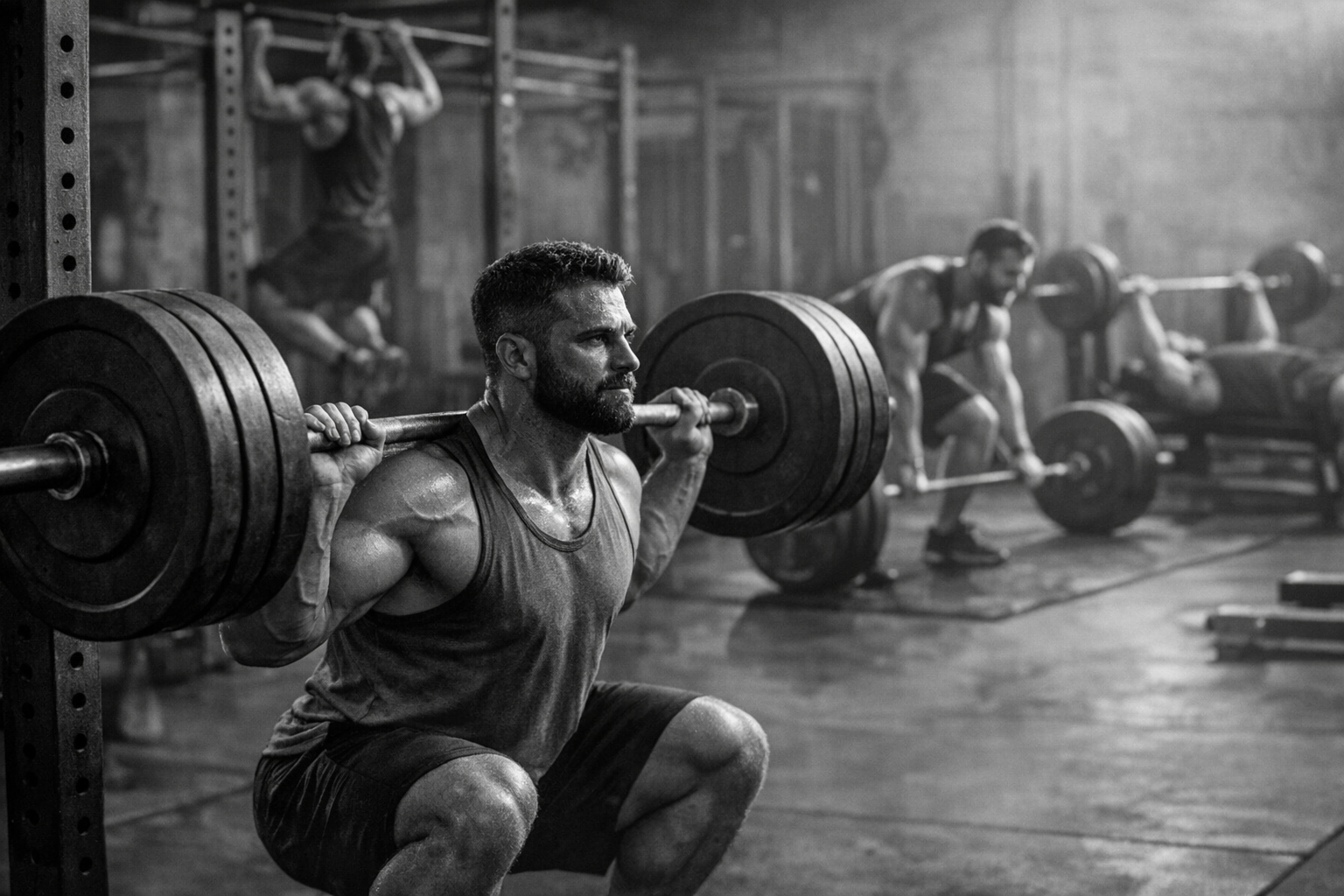
Squats are one of the most effective lower-body exercises for muscle growth. They target the quadriceps, glutes, adductors, hamstrings, and core. Back squats are a classic mass-builder, while front squats and goblet squats offer excellent alternatives depending on your experience and mobility.
Deadlifts
Deadlifts train the posterior chain, including the glutes, hamstrings, lower back, traps, and forearms. They are excellent for overall strength and size, though they should be programmed carefully because they are highly demanding. Romanian deadlifts are also valuable for hamstring development and can be less fatiguing than conventional deadlifts.
Bench Press
The bench press is a cornerstone of upper-body muscle growth. It builds the chest, triceps, and front delts while allowing progressive overload with relatively stable mechanics. Dumbbell bench presses are another great option if you want a greater range of motion and more unilateral control.
Pull-Ups and Chin-Ups
These bodyweight movements are outstanding for developing the back and biceps. Pull-ups emphasize the lats, while chin-ups tend to involve the biceps more strongly. If you can perform them with added weight, they become even more effective for hypertrophy.
Rows
Barbell rows, dumbbell rows, and cable rows all help build a thicker, stronger back. Rows are important because they balance pressing movements and improve posture, scapular stability, and upper-body development overall.
Overhead Press
The overhead press targets the shoulders, triceps, and upper chest. It is one of the best compound exercises for building shoulder size and upper-body strength. Standing presses also demand core engagement, making them a highly productive movement.
Lunges and Split Squats
Single-leg compound exercises like lunges and Bulgarian split squats are excellent for leg growth, balance, and athletic development. They help correct strength imbalances and provide a strong stimulus to the quads and glutes with less spinal loading than some bilateral lifts.
How to Program Compound Exercises for Growth
To maximize muscle growth, compound exercises should be programmed with enough volume, intensity, and frequency to encourage progression. A good starting point is to train each major muscle group at least twice per week.
Most hypertrophy-focused sets will fall in the 6 to 12 rep range, though heavier work in the 3 to 6 rep range can be useful for strength, and higher-rep sets can still be effective when taken close to failure. The key is not just selecting the right exercise, but doing enough quality work over time.
Progressive overload is essential. That means gradually increasing weight, reps, or training volume as you get stronger. Without progression, even the best compound exercises will eventually stop producing growth.
Rest periods also matter. For big compound lifts, resting two to three minutes between sets usually allows better performance and more total quality reps. Shorter rest may reduce the amount of weight you can handle, which can limit muscle-building potential.
Common Mistakes to Avoid
One common mistake is using poor technique in an attempt to lift more weight. While heavier loads are important, sloppy form can shift tension away from the target muscles and increase injury risk. Controlled reps with a full range of motion are usually better for growth than partial, rushed repetitions.
Another mistake is doing too much volume too soon. Compound exercises are demanding, and recovery can become a limiting factor if you overdo it. Start with a manageable amount of work and build gradually as your body adapts.
Many lifters also neglect accessory work entirely. While compound exercises should be the core of your routine, isolation movements can still help bring up lagging muscles and add extra hypertrophy volume without excessive systemic fatigue.
Conclusion
Compound exercises are one of the most effective tools for muscle growth because they let you train multiple muscle groups, use heavier loads, and build strength efficiently. If you build your workouts around squats, presses, rows, deadlifts, and pull-ups, you will create a strong foundation for long-term size and performance. Train with good form, progress consistently, and recover well, and your results will follow.