
Introduction
Eating healthy does not have to mean spending a lot of money. With a little planning, smart shopping, and a few simple cooking habits, you can build meals that are nourishing, satisfying, and affordable. In fact, budget-friendly eating often starts with the basics: choosing whole foods, reducing waste, and making the most of what you already have in your kitchen. The goal is not perfection. It is finding practical ways to feed yourself and your family well without stretching your budget.
Plan Your Meals Before You Shop
One of the easiest ways to save money is to plan meals ahead of time. When you know what you are going to cook, you are less likely to buy extra ingredients that sit unused. Start by looking at what you already have in your pantry, fridge, and freezer. Then build a simple meal plan around those items.
Use a Weekly Meal Plan
Choose a few breakfast, lunch, and dinner options for the week. Keep the plan flexible so you can reuse ingredients across multiple meals. For example, a bag of brown rice can work in grain bowls, stir-fries, and soups. A large batch of roasted vegetables can become a side dish one night and a wrap filling the next.
Shop with a List
A shopping list helps you stay focused and avoid impulse purchases. Stick to the ingredients you need for the meals you planned. If something is not on the list, pause before adding it to your cart. This small habit can make a big difference over time.
Build Meals Around Affordable Staples
Healthy eating on a budget becomes much easier when you rely on low-cost staple foods. Many of the most nutritious ingredients are also among the most affordable.
Choose Filling, Nutritious Basics
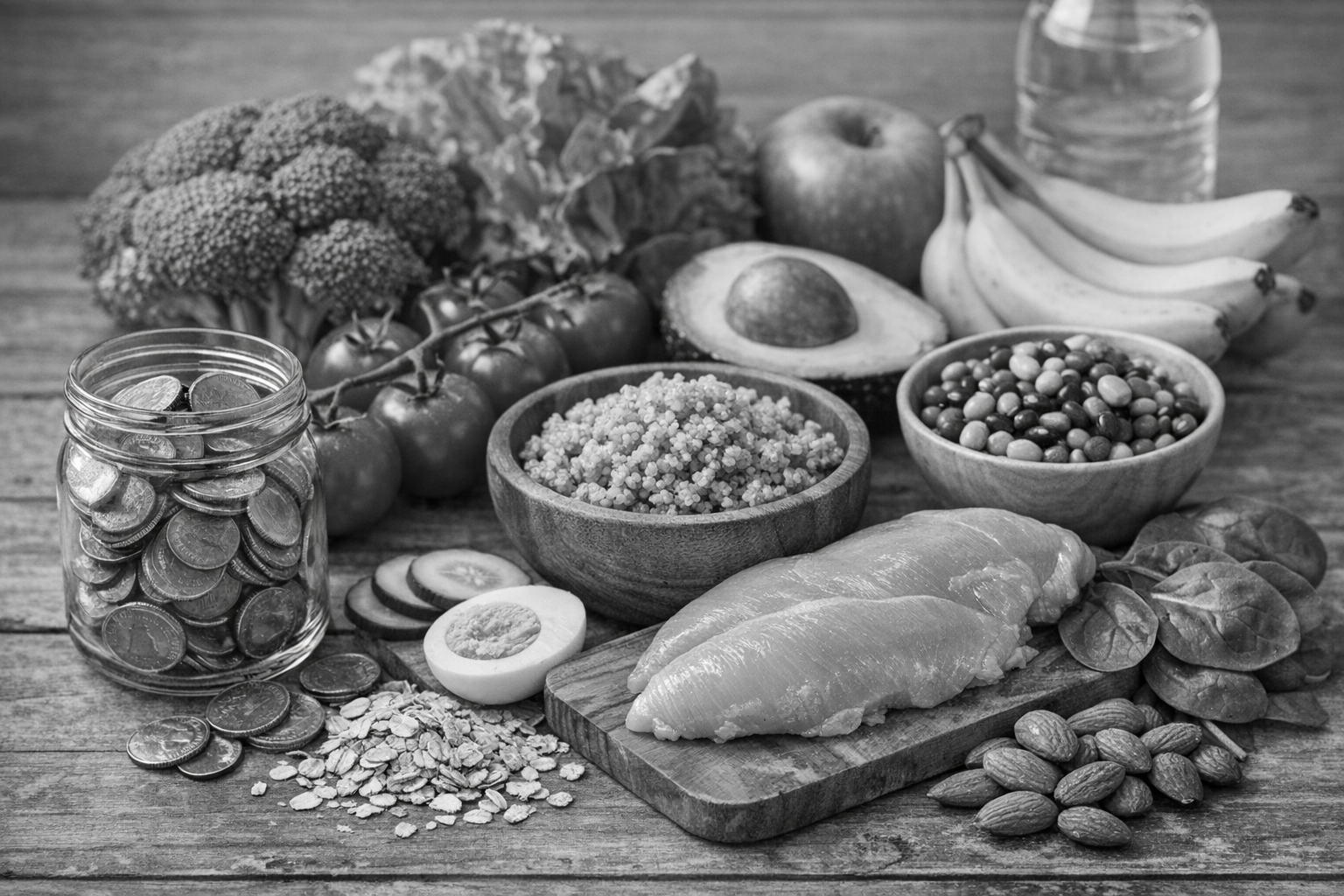
Great budget-friendly staples include oats, rice, beans, lentils, eggs, potatoes, frozen vegetables, whole wheat pasta, canned tomatoes, peanut butter, and plain yogurt. These foods are versatile, filling, and often less expensive than prepackaged convenience items.
Mix Protein, Fiber, and Healthy Fats
To stay full longer, aim to include protein, fiber, and healthy fats in your meals. Beans, lentils, eggs, canned tuna, tofu, and yogurt are all budget-conscious protein sources. Pair them with whole grains, vegetables, and healthy fats like olive oil, nuts, or seeds when possible. Balanced meals help reduce snacking and make it easier to stick to your food budget.
Buy Smart at the Store
The way you shop matters just as much as what you buy. A few simple strategies can help you get more value for your money.
Compare Unit Prices
Instead of looking only at the sticker price, check the unit price on the shelf tag. This shows the cost per ounce, pound, or item and helps you compare package sizes more accurately. Sometimes the larger size is cheaper, but not always.
Choose Store Brands
Store brands are often just as good as name brands and usually cost less. This is especially true for pantry staples like oats, rice, canned beans, pasta, and frozen vegetables. Try store-brand versions first before deciding whether the more expensive option is worth it.
Buy Seasonal Produce
Fruits and vegetables tend to be cheaper when they are in season. Visit local markets or grocery store flyers to see what is currently affordable. In many cases, frozen produce is also a smart choice because it is picked at peak ripeness and can last much longer than fresh items.
Cook More at Home
Home cooking is one of the best ways to save money and improve the quality of your diet. Restaurant meals, takeout, and packaged convenience foods can add up quickly, especially if they become part of your regular routine.
Make Simple Meals
You do not need complicated recipes to eat well. Some of the healthiest meals are the simplest ones: scrambled eggs with vegetables, lentil soup, chili with beans, sheet pan chicken and vegetables, or rice bowls with tofu and greens. Focus on meals that are easy to repeat and easy to adjust based on what you have.
Batch Cook and Use Leftovers
Cooking larger portions saves both time and money. Make extra soup, stew, rice, roasted vegetables, or protein so you can use leftovers for lunch or dinner the next day. Repurposing leftovers helps reduce food waste and cuts down on how often you need to cook from scratch.
Reduce Food Waste
Food waste is wasted money. The more efficiently you use what you buy, the more value you get from each grocery trip.
Store Food Properly
Learn the best way to store fruits, vegetables, grains, and leftovers so they last longer. Keep older items in front of newer ones in the fridge and pantry so they are used first. If you buy fresh produce, wash and prep it soon after shopping to make it easier to grab for meals and snacks.
Use Leftovers Creatively
Leftover vegetables can be added to omelets, pasta, soup, or quesadillas. Extra chicken can become sandwiches, wraps, or salads. Even small amounts of leftover rice or beans can be combined into a new meal. A little creativity goes a long way in stretching your food budget.
Look for Healthy Foods on Sale
Sales and discounts can help you stock up on nutritious foods without overspending. Check weekly flyers, store apps, and digital coupons for deals on items you already use often. If a healthy staple is on sale and has a long shelf life, buying a few extras can save money later.
Freeze What You Won’t Use Right Away
If you find a good deal on bread, meat, vegetables, or fruit, freeze portions before they spoil. Freezing helps you take advantage of lower prices without worrying about waste. Label items with the date so you can use them in order.
Make Healthy Eating More Sustainable
Healthy eating on a budget is easier when it fits your real life. Start with a few changes instead of trying to overhaul everything at once. Maybe you begin by cooking at home three nights a week, buying store-brand pantry items, or adding one extra vegetable to dinner. Small habits are easier to maintain and can still lead to major savings over time.
It also helps to remember that budget-friendly eating does not mean cutting out all treats or buying only the cheapest foods. A sustainable approach leaves room for enjoyment while keeping your spending under control. When you focus on nourishing basics, smart planning, and reducing waste, healthy eating becomes much more manageable.
Conclusion
Eating healthy on a budget is absolutely possible with the right approach. By planning meals, shopping wisely, cooking at home, and using ingredients efficiently, you can create balanced meals without overspending. Start with one or two changes and build from there. Over time, these simple habits can help you save money, waste less food, and feel better about what you eat.